
Regulowana
- Poziom ryzyka
- Wysoki
- Ryzyko a zwrot
- Średni
- Już od
- €1,000
Pytania o inwestowanie? Zapytaj przewodnika AI.
Cześć! Jestem przewodnikiem AI Crowdinform.
Zaloguj się za darmo, aby pytać przewodnika AI o platformy, projekty i swoje plany.
Odpowiedzi pochodzą ze sprawdzonych danych Crowdinform. Informacja, a nie osobiste doradztwo inwestycyjne.
Szukam… Coś poszło nie tak. Spróbuj ponownie. Pozostałe pytania dziś: {n}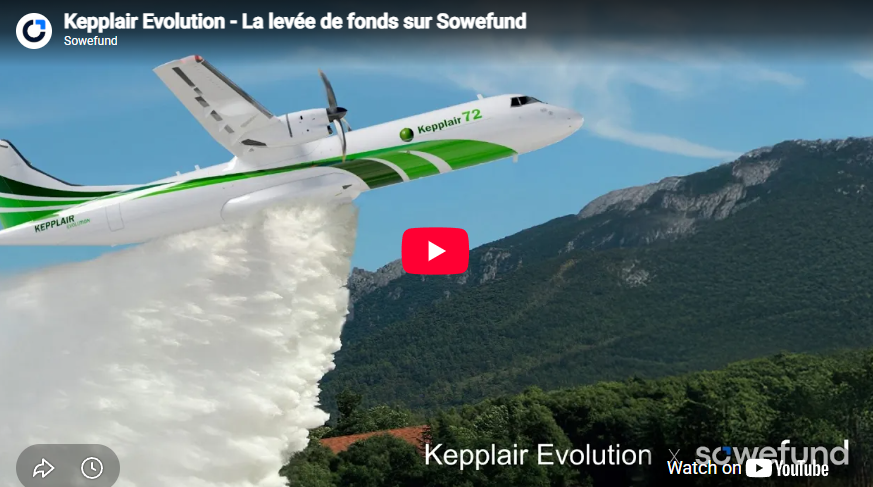
Francja
Platforma szacuje do 7×
Zwykle tylko wtedy, gdy spółka zostanie sprzedana lub wejdzie na giełdę. Szacunki są wyłącznie twierdzeniami platformy.
Ryzyko utraty kapitału. Większość startupów upada; szacunki są wyłącznie twierdzeniami platformy. Udziały trudno sprzedać przed wyjściem z inwestycji.
Nasza AI daje temu projektowi 65 na 100 punktów: Średnia. Jak działa ocena AI
Informacje, a nie osobiste doradztwo inwestycyjne. Ocena AI dotyczy dokumentów publikowanych przez platformę, może być błędna i nie przewiduje zysków.
Stretched but arguable. The €60M price could not be matched against any disclosed valuation from a comparable funding round (none are public in this niche); the one public reference we found — Bridger Aerospace, a US aerial-firefighting operator with $122.8M revenue, valued by the stock market at roughly $97–131M — suggests €60M is a full price for a company with no revenue yet, though that comparison is imperfect.
Average. The strongest evidenced precondition is external validation: a €5M French-state and EU grant, a letter of interest from the French civil-security directorate, and letters of intent covering 18 aircraft. The biggest gap the evidence shows: the modified aircraft has not yet flown, and everything — orders, revenue, the business itself — waits on one certificate expected in March 2027.
The standard expectation for a Series A investment; the company states no target of its own. If reached, illustratively 5x–7x before fees and future dilution; see ③ and ④.
① The six integrity checks in one line; each is explained in the red-flags section.
What we could check. We verified the company’s registration, the €5M France 2030 / EU grant and its "national interest" designation, the civil-security letter of interest, two of the four letters of intent (Amelia; Corsica Technics), the prior fundraises (€6.5M since 2024) and the national firefighter federations’ support against public sources — 11 of 23 checked claims confirmed, none contradicted. The €60M valuation basis, all share terms, the ownership table, all financial figures and the July 2026 first close rest on the listing alone — see the questions section. Your money is locked in. Crowdfunding shares normally cannot be sold early — expect your money to be tied up for several years, until the company is sold or a similar event happens.
Three answers, one honest note. The fairness score says whether the entry price is supported by the sector benchmarks we could find. The AI Score is our read on whether the company has the preconditions in place to reach a stage where a sale or similar event becomes possible — it audits readiness on the disclosed evidence; it is not a probability of success, and even companies with every precondition in place fail more often than they succeed, which is why crowdfunding only works as a small part of a diversified portfolio. The returns range is an illustration built from named benchmarks, not a forecast. Where something was not in the pack we reviewed, it did not lower any score — it appears in the questions list instead, so you can ask the company directly before investing. The listing was reviewed by Sowefund, a licensed crowdfunding platform, before going live. Nothing in this memo is a recommendation.
The company has no revenue yet, normal for an aircraft programme before certification. The 18-aircraft total is corroborated by FlightGlobal (July 2026); the March 2027 date is corroborated by press as the company’s EASA-agreed schedule.
Kepplair Evolution, founded in Toulouse in 2012, is developing the KEPPLAIR 72 "Forest Keeper": a kit that converts the ATR 72 — a widely used, already-certified regional aircraft — into a water bomber that drops 7,500 litres of water or fire retardant on forest fires. Unlike the classic Canadair-type aircraft, it refuels on the ground like a cargo plane, which removes the dangerous low-pass water-scooping manoeuvre and, the company reports, cuts pilot training substantially. Outside the fire season the same aircraft can carry cargo or evacuate patients, which the company says lifts its usage to 70–80% of the year against 20–30% for a conventional water bomber. Customers are governments and civil-security agencies (about 60% of the market, per the company), private operators and aircraft lessors; the company earns by selling conversion kits at €10.5–13.6M each, plus recurring maintenance (about €30,000 per month per aircraft), training and support. So far it has passed the main design reviews under a formal pre-application contract with the European aviation regulator (EASA), secured its first test aircraft in summer 2026, raised about €18M including €5M of public subsidies, and signed letters of intent covering 18 aircraft. This raise — €9M in total, of which the company reports €6M closed with institutional investors in July 2026 — funds the certification campaign (certificate targeted March 2027), the first converted aircraft, industrial ramp-up and working capital.
The standard expectation for a Series A round; the company itself states no return target in the pack we reviewed. One honest note on the label: this round is called Series A, but the company has no revenue yet and its product has not flown — features more typical of an earlier stage, where investors usually demand a higher target (around 10x) to compensate for higher risk.
Illustratively 5x–7x before fees. Method: entry at the disclosed €60M valuation; exit sized from the hardware-sector norm of a strategic purchase at 2–4x revenue (dossier benchmarks block); no recorded exits exist in this niche to compare against — the sector’s reference transactions are government aircraft purchases (for example France’s ~€200M order for two DHC-515s in June 2026, per Le Journal des Entreprises), which are product sales, not company sales. These figures do not include dilution from future fundraising rounds, which would reduce actual returns — see the dilution section.
The SPV’s fees at entry, per year and at exit are not in the pack we reviewed (question 3). Startup investing is high risk: most early-stage companies fail or return little, and reaching any such target remains a minority outcome even for well-prepared companies.
The company’s own projection sits inside the band; delivering it requires certification on schedule and the conversion of intent letters into paid orders.
Certify the conversion (March 2027), convert the letters of intent into firm orders, deliver the first 8 aircraft by 2030 — the break-even point, per the company — then scale to 12 kits per year and 75 aircraft delivered by 2034. The company describes three ways investors could eventually be paid: a purchase of the company by a larger aeronautics group; a purchase or shareholding by a specialised operator or lessor; or industrial partnerships evolving into mergers. No comparable exits were provided in any material reviewed, and our own search found no recorded company sales in this niche.
On the disclosed €60M price, a 5–7x outcome requires the company to be worth roughly €345–483M when sold. Businesses like this — hardware sold to industrial and government buyers — typically change hands at 2–4 times annual revenue, so that valuation implies roughly €86–242M of yearly revenue. The company’s own projection of ~€167M revenue in 2030 sits inside that band; delivering it requires certification on schedule and the conversion of intent letters into paid orders.
Valuation on the listing for this round; no revenue yet.
Stock-market value, mid-2026; US aerial-firefighting operator with $122.8M of 2025 revenue, carrying heavy debt.
Bridger is valued at about 0.8–1.1x its revenue; it is a services operator, not a kit manufacturer, so the comparison is imperfect in both directions. No comparable funding round in this niche has a publicly disclosed valuation (Hynaero’s €117M round and Positive Aviation’s €8M round were both announced without valuations). Fairness 3 / 5: stretched but arguable.
Score = each category’s score weighted by its importance; weights sum to 100%.
Strong for a company with no product in service: letters of intent for 18 aircraft (two verified in the press), a civil-security letter of interest, €18M raised, and the prototype secured on schedule. But nothing is contractually firm: every letter of intent converts only after certification, the stated LOI values are the company’s own figures, and there is no revenue.
The need is independently confirmed: the Canadair CL-415 has not been produced since 2015, fleets are ageing, and the EU has put €600M into new firefighting aircraft. Buyers have signalled interest in this specific product through four LOIs and firefighter-federation endorsements. The caution the evidence shows: the EU’s confirmed money went to a competing aircraft type.
Converting a proven, in-production aircraft is a deliberate risk-reduction choice, the drop system rests on a device patented in 2019 with a Toulouse fluid-mechanics institute, and the company reports passing its preliminary and critical design reviews. The central validation is still ahead: the modified aircraft has not flown and no drops have been performed.
A founder confirmed as an airline pilot who has carried the project since 2012, a secretary general with a verified senior public-sector and management record, and an assembled ecosystem of named industrial partners (ACIA, Aerotec & Concept/Expleo, Trotter Controls, IMFT). The registry recorded no salaried employees as of its 2023 reference data, and the current organisation’s size is not in the pack we reviewed.
A real, growing, policy-backed market — but independent size estimates range from ~$2.2bn to $17.5bn by 2035, and the company quotes the top of that range. Its 400-aircraft demand figure has no independent source we could find.
A formal pre-application contract with EASA fixes the certification framework, the company reports both major design reviews passed, and the March 2027 certificate date is corroborated by press as the EASA-agreed schedule. The certificate itself — the single gate on the whole business — is still months of testing away.
The disclosed economics are coherent: kits at €10.5–13.6M, 55–57% margins, break-even at the 8th kit, and recurring maintenance revenue, in an asset-light integrator setup. Disclosure stops at headlines — no financial statements, cost build-up, cash position or funding plan for the sub-€40M programme appear in the pack we reviewed.
Kepplair is the only identified ground-refuelled mid-size conversion, and its certification timeline leads its French rivals. But the field is contested and better funded than the listing’s "virtually nonexistent" framing: Hynaero holds €117M, Positive Aviation converts the same ATR 72 with a firm US launch order, and DHC-515 deliveries begin the same year Kepplair targets its certificate.
External validation and a credible certification lead, gated on a first flight and a certificate that are both still ahead.
| 85–100 · Excellent | All key preconditions for reaching an exit stage are evidenced and strong — rare at this stage |
| 70–84 · Good | Preconditions largely in place, with specific gaps — named in the questions section |
| 50–69 · Average | Meaningful preconditions missing or weakly evidenced |
| 30–49 · Weak | Several core preconditions absent, or the evidence points against them |
| 1–29 · Critical | Fundamental preconditions are not visible in the evidence |
The point of the picture: the sub-€40M programme cost against ~€18M raised implies further funding needs whose plan is not in the pack. Cash, monthly spending and runway are not in the pack either (question 7).
⑧ Each key claim, and how far it could be checked: 11 of 23 checked claims confirmed, none contradicted. A missing item did not lower the score; it is a question to ask.
These are facts the company holds and can supply on request. They were not in the materials we reviewed — they may well exist in interviews, webinars or the company’s data room. The score above is based on what was available — these questions are how you close the gap.
You would buy ordinary company shares — either directly in your own name, or through a holding vehicle (an "SPV") set up for the raise, at your choice. The listing states that individual investors join "under the same conditions as institutional investors", but the share class, your voting rights, and how a decision to sell the company would reach you are not in the pack we reviewed — they sit in the shareholders’ agreement, which is why they lead the questions list above. Investments from €500 are stated to be eligible for the French PEA tax wrapper and the 150-0 B ter tax-deferral scheme. Full mechanics are in the reference section below.
Pełna analiza obejmuje pożyczkobiorcę lub spółkę, zabezpieczenie, przepływy pieniężne, ryzyka i werdykt. Zaloguj się, aby ją przeczytać.
Informacje, a nie osobiste doradztwo inwestycyjne. Ocena AI dotyczy dokumentów publikowanych przez platformę, może być błędna i nie przewiduje zysków.
Zaloguj się, aby zapytać AI o dokumenty tego projektu.
Zaloguj się👍 Tak · 0 👎 Nie · 0
Sowefund
Cel: €600k
Sowefund
Cel: €750k
FunderNation
Cel: €1.4m