
Regulated
- Risk level
- Highest
- Risk-return
- Bad
- Start from
- €100
Questions about investing? Ask the AI guide.
Hi! I'm the Crowdinform AI guide.
Sign in free to ask the AI guide about platforms, projects and your plans.
Answers come from Crowdinform's checked data. Information, not personal investment advice.
Looking it up… Something went wrong. Please try again. {n} questions left today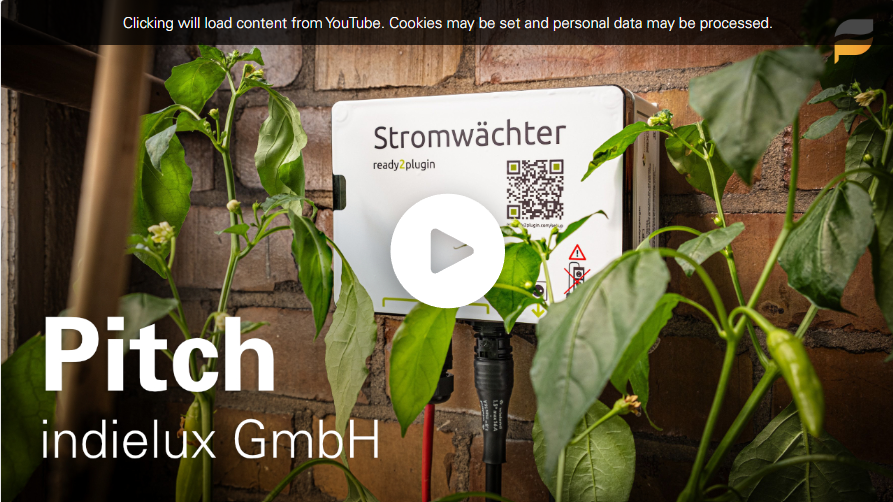
Germany
The platform estimates 3.42–7.19×
Usually only if the company is sold or listed. Estimates are the platform's own claims.
Capital at risk. Most startups fail; estimates are the platform's own claims. Shares are hard to sell before an exit.
Our AI gives this project 72 out of 100: High. How the AI score works
Information, not personal investment advice. The AI score rates the documents the platform publishes, can be wrong, and does not predict returns.
Insufficient comparables to assess — the company set a €12M pre-money valuation, but we found no comparable funding rounds or recorded exits for plug-in-solar safety-technology companies at this stage to benchmark it against. How the company set the price is described in the valuation section; the questions section shows what to ask.
Good. Strongest evidenced precondition: the regulatory framework the business depends on is real and in force — the December 2025 VDE product standard limits ordinary socket setups to 960 watts, and the founder verifiably co-drove that standardisation for nine years. Biggest gap: no revenue figures anywhere in the pack, and the last available accounts (2023) show debt at roughly 41 times equity.
Company plan: 3.42x (base) to 7.19x (target) over 5 years — equal to 29–54% per year. This is a loan whose interest depends on the company’s profit, value growth and any sale of the company, so no standard venture multiple applies; the figures come from the company’s own two financial-plan scenarios (2030 revenue €18.3M base / €41.1M target). No recorded comparable exits were found to benchmark the required scale against. These figures do not include dilution from future fundraising rounds, which would reduce actual returns — see the dilution section.
① The six integrity checks in one line; each is explained in the red-flags section.
What we could check. We verified the company’s registration, its 2022 crowdfunding (≈€720,000 from 689 backers), the Maxxisun licence deal (the Maxxicharge CCU V2 storage system ships with ready2plugin inside — confirmed by the manufacturer’s own product pages and independent product tests), the Fraunhofer ISE testing as reported, the industry awards, and the new VDE product standard against public sources. The company’s revenue, margins, cash position, licence economics and shareholder structure rest on its own materials — see the questions section.
Three answers, one honest note. The fairness line says whether the entry price is supported by sector benchmarks we could find — here, none were found, so it is not scored rather than guessed. The AI Score is our read on whether the preconditions for reaching a stage where a return event can happen are evidenced — it audits readiness on the disclosed evidence; it is not a probability of success, and even companies with every precondition in place fail more often than they succeed, which is why crowdfunding only works as a small part of a diversified portfolio. The returns range is an illustration from the company’s own plan, not a forecast. Where something was not in the pack we reviewed, it did not lower any score — it appears in the questions list instead, so you can ask the company directly before investing. The listing was reviewed by the operating platform (FunderNation, a licensed German financial-investment broker) before going live. Nothing in this memo is a recommendation.
The debt-to-equity ratio is the only hard balance-sheet figure in the pack (regulatory information sheet, from the 2023 accounts). The licensee is Maxxisun; the 960-watt limit is the DIN VDE V 0126-95 product standard, in force since 1 December 2025.
indielux is a Berlin company, founded in 2014, that solves a safety problem in “balcony power plants” — solar panels that plug into an ordinary wall socket. Since December 2025, a German product standard limits such ordinary-socket setups to about two panels (960 watts); most households would want several times more. indielux’s patented ready2plugin technology continuously models how warm the home’s wiring is getting and cuts the solar feed-in before an overload can occur — which, per the company, allows up to 20 panels on a normal socket and covers up to 80% of a family home’s electricity needs.
It earns money three ways: selling its own “power monitor” device and complete plug-and-play solar systems to households (and via dropshipping to dealers and installers), and — the intended growth engine — licensing the technology to manufacturers of plug-in storage systems, either as embedded software or, in future, as a cloud API. The first licensee is live: Maxxisun’s Maxxicharge CCU V2 ships with ready2plugin inside. The company reports seven-figure cumulative revenues since the product launched in autumn 2023, and that a 2022 crowdfunding of about €720,000 (689 backers, all supplied) funded the move into series production.
This raise — up to €1.4M as a profit-participating subordinated loan — funds, per the regulatory information sheet: external developers for the cloud API and product development (45.9% of net proceeds), external project management (19.2%), production of 1,160 power-monitor units (10.7%), marketing (9.6% across two items), patent maintenance (6.6%), two management hires (3.0%) and a 5% liquidity reserve.
29% to 54% per year. These are the company’s own two financial-plan scenarios (base case and target case), published on the campaign page. Because this is a loan with profit-, growth- and exit-linked interest rather than shares, no standard venture multiple applies — the question is whether the contractual interest and repayment will actually be paid.
Illustratively 3.42x–7.19x before fees — taken directly from the company’s base and target scenarios, since no sector benchmark exists to substitute. We found no recorded comparable exits to say whether the required scale sits within this sector’s track record. These figures do not include dilution from future fundraising rounds, which would reduce actual returns — see the dilution section. The downside is standard for this asset class: most early-stage investments return little or nothing, and this instrument can lose 100%.
There is no guaranteed interest at all, and in insolvency you rank behind every ordinary creditor; this instrument can lose 100%.
The regulatory information sheet’s repayment source assumes on average 1,030 systems and 590,000 licences sold per year; one licensee is live today.
Scale the licensing business: win further licensees for storage systems, finish the ready2plugin cloud API, and grow direct system sales — the plan’s main KPI is the number of licensed products, targeting 2030 revenue of €18.3M (base) or €41.1M (target) versus seven-figure cumulative revenue today. Your return would arrive as: a yearly share of any annual profit; plus, at the end of the term, a bonus tied to the company’s value growth (or, if no financing round happened in the final year, tied to its revenue); or, if more than half the company is sold during the term, your loan back plus a share of the sale proceeds. No comparable exits were provided in any material reviewed, and none were found in public sources.
The company must first stay solvent — every payment is legally blocked if it would trigger insolvency — then either earn profits (for yearly interest) or grow its valuation or revenue substantially (for the end-of-term bonus), or be sold at a higher value than today’s €12M. The regulatory information sheet’s repayment source assumes on average 1,030 systems and 590,000 licences sold per year; one licensee is live today.
Score = each category’s score weighted by its importance; weights sum to 100%.
The founder’s nine years inside the VDE/DKE standardisation bodies, the lay-registration rule change he negotiated, and two major industry awards are all publicly confirmed — rare, directly relevant credentials. The wider team is thinly described: no team size or CVs in the pack, and the CTO’s background could not be located publicly.
The product is real, sold in the thousands per the company, and — decisively — embedded in a third party’s shipping product that independent reviewers have tested. The company itself calls the current hardware an interim step (“Minimum Viable Product”); the easy plug-and-play experience arrives only with integrations.
Commercial traction exists: seven-figure cumulative revenues reported, a fulfilled €720k pre-order campaign, one paying licensee. But the disclosed financial position is weak — debt at 4,117% of equity per the 2023 accounts, losses today — and no revenue figures or growth series appear in the pack.
The demand driver is verified: roughly 1.2 million German households already run plug-in solar and the new standard creates a hard 960-watt ceiling that only safety technology can lift. The company’s licence-potential figures (up to €1.36bn in Germany) come without a named third-party study.
A sensible dual engine (own hardware sales funding a scalable ~5%-of-device-price licensing business), proven working at small scale by the Maxxisun deal. Unit economics are not in the pack, and the plan’s 590,000 licences per year rests on assumptions the pack does not show.
Public research confirms much larger competitors (Anker, EcoFlow and others) fighting for the same customer wish — more power from a socket. The company’s defence is its patents and standard-compliance position; the claim that competitors cannot engineer around the patents is the company’s own, with no legal opinion in the pack.
The core algorithm has run in the field since 2023, Fraunhofer ISE tested function and failure safety in the standardisation project per the cited report, and the Maxxisun integration reached series readiness in under three months. The cloud API — nearly half of this round’s proceeds — is still to be built.
The standards framework the thesis depends on is confirmed and in force, and the company helped write it. Operating above the standard’s 960-watt ordinary-socket case relies on the company’s own safety-assessment pathway; no certification document for that mode is in the pack — asked in the questions below.
Preconditions largely in place, with specific gaps named in the questions section.
| 85–100 · Excellent | All key preconditions for reaching an exit stage are evidenced and strong — rare at this stage |
| 70–84 · Good | Preconditions largely in place, with specific gaps — named in the questions section |
| 50–69 · Average | Meaningful preconditions missing or weakly evidenced |
| 30–49 · Weak | Several core preconditions absent, or the evidence points against them |
| 1–29 · Critical | Fundamental preconditions are not visible in the evidence |
No yearly revenue, profit or cash figures are in the pack, so an accounts picture is left out. The one hard figure: debt at 4,117% of equity in the 2023 accounts; the company states a return to profit in 2026.
⑧ Each key claim, and how far it could be checked. A missing item did not lower the score; it is a question to ask.
These are facts the company holds and can supply on request. They were not in the materials we reviewed — they may well exist in interviews, webinars or the company’s data room (an NDA-gated data room is offered on the campaign page). The score above is based on what was available — these questions are how you close the gap.
You would own a loan to indielux GmbH, not shares. You get no vote and no say in company decisions. Your economic stake is a calculated quota — €100 invested equals about 0.000746% of the company’s value for interest purposes (0.000806% if you invested within the first 31 days, an ~8% early-bird bonus). The loan runs to 30 April 2031, cannot be cancelled early by you, and is repaid — with any accrued interest — in twelve monthly instalments after the term ends. You must also sign a pooling agreement: a FunderNation company acts as the investors’ joint voice, and decisions taken by 75% of votes cast bind you even if you voted against. Because the loan is deeply subordinated, every payment to you is blocked whenever it would push the company toward insolvency. Full mechanics are in the reference section below.
The full review covers the borrower or company, the security, the cash flow, the risks and a verdict. Sign in to read it.
Information, not personal investment advice. The AI score rates the documents the platform publishes, can be wrong, and does not predict returns.
Sign in to ask the AI about this project's documents.
Sign in👍 Yes · 0 👎 No · 0
Sowefund
Raising €9m
Sowefund
Raising €600k
Sowefund
Raising €750k