
Regulated
Can sell early
- Risk level
- Highest
- Risk-return
- Medium
- Start from
- €500
Questions about investing? Ask the AI guide.
Hi! I'm the Crowdinform AI guide.
Sign in free to ask the AI guide about platforms, projects and your plans.
Answers come from Crowdinform's checked data. Information, not personal investment advice.
Looking it up… Something went wrong. Please try again. {n} questions left today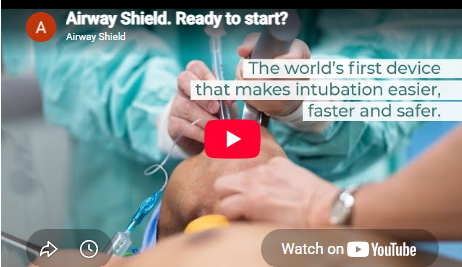
Spain
9 of the company
Check the documents for how the shares are held and what rights they give.
The platform estimates up to 8×
Usually only if the company is sold or listed. Estimates are the platform's own claims.
Around 2030
Only if a sale or listing happens; shares are hard to sell before that.
Capital at risk. Most startups fail; estimates are the platform's own claims. Shares are hard to sell before an exit.
Our AI gives this project 63 out of 100: Medium. How the AI score works
Information, not personal investment advice. The AI score rates the documents the platform publishes, can be wrong, and does not predict returns.
Broadly supported. The €8M asking price sits below the European seed median implied by Carta's 2025 data, and is a disciplined 2.0x step-up from the company's own 2023 round at €4M — across which it earned a CE mark, ran two patient studies and had a US patent granted. The regulatory sheet also shows discounts: put in €5,000 or more and you pay €49.76 a share instead of €53.79, an effective price of about €7.4M rather than €8M. It looks high only against revenue, a poor measure six months into selling.
Average: meaningful preconditions missing or weakly evidenced.
The company's own plan. If reached, illustratively 5x–12x gross, or about 4.7x–11.5x after Capital Cell's 8% success fee, and before future dilution. Method: at the €53.79 share price, every €8.8M the company is eventually sold for returns roughly 1x to this round; €45M–€110M is the band into which the two closest recorded airway-device takeovers fall (Inogen/Physio-Assist, up to $45M, 2023; Medtronic/Aircraft Medical, $110M, 2015).
The six integrity checks in one line; each is explained in the red-flags section.
What we could check. We checked 41 of the company's claims against public sources: 22 were confirmed, 5 partly confirmed, 13 could not be found either way, and one was contradicted — the claim that the company owns its patent outright. The FDA designation, the prior fundraises, the public grants, the awards and all four comparable takeovers check out against original filings and press releases. We also have the regulatory sheet the platform must publish (the KIIS), which settles the share price, the type of shares, the fees and the rights you get — and which corrects the campaign on two of them. Revenue, profit margin, cash in the bank and the share register still rest on the company's own materials or were not in the pack we reviewed — see the questions section.
Three answers, one honest note. The fairness score says whether the price being asked is supported by the benchmarks we could find. The AI Score is our read on whether the building blocks for reaching a sale of the company are in place, judged on the evidence disclosed — it is not a probability of success, and even companies with every building block in place fail more often than they succeed, which is why this kind of investing only works as a small part of a spread-out portfolio. The returns range is an illustration built from named benchmarks, not a forecast. Where something was missing from the pack, it did not lower any score — it appears in the questions list instead, so you can ask the company directly. The listing was reviewed by Capital Cell, a crowdfunding platform licensed by Spain's financial regulator, before it went live. Nothing here is a recommendation.
Airway Shield makes a single-use plastic mouthpiece used when a patient needs a breathing tube passed into the windpipe — a procedure performed in operating theatres, intensive care units, ambulances and emergency departments. The device does three things at once: a moulded channel steers the tube towards the airway, a reinforced section shields the patient's front teeth, and a cover over the mouth reduces what the medical staff breathe in. The company reports that the customers are hospitals, bought through specialist medical-device distributors, with the company's own four-person sales team covering Spain and distributors handling other countries. Because the device is thrown away after each use, every procedure generates a new sale.
The device carries a CE mark, allowing sale across Europe, and the company reports registrations in Brazil and Turkey. Selling began in Spain in January 2026; press coverage in June 2026 reported the device had been presented at more than 25 Spanish hospitals, with six starting the purchase process and two pilot programmes running in large Madrid hospitals. Manufacturing is outsourced to partners in Australia and Taiwan. The company has raised roughly €3.4M to date, including two earlier crowdfunding rounds on this same platform and public funding from ENISA and the Spanish innovation agency CDTI.
This raise of €800,000 is allocated 60% to expanding sales in Europe and preparing to enter the United States, 30% to further clinical studies, and 10% to quality systems, regulatory upkeep and patent protection. The company reports it expects a decision from the US Food and Drug Administration during 2026, which would open the American market. The round is all-or-nothing: if €800,000 is not reached by 23 August 2026 the money is returned to investors. It can be oversubscribed up to €1,000,000.
A sale of the company targeted for 2030. This is the company's own plan, not a standard assumption: the figure appears on the campaign and the company attributes the estimate to Capital Cell, based on comparable airway-device takeovers, the €8M price of this round, and the revenue the company projects by 2030.
At the headline share price, every €8.8M the company is eventually sold for returns roughly 1x to this round; the two closest recorded takeovers bracket €45M to €110M.
No fee is charged if there is no gain. Most early-stage companies fail or return little, whatever their targets say.
The 8x target sits inside the band of recorded takeovers, at a sale of about €70M, below three of the four the company itself cites. On the 2-to-4-times-revenue rule of thumb for device makers that is around €18M–€35M of annual sales; the company’s own forecast for 2030 is €162M.
Win a US clearance in 2026, open a US office, run a 750-patient trial across ten hospitals in six countries against the two tools doctors use today (the bougie and the stylet), raise a further €3M in 2027, and be sold to a large medical-device group around 2030. The company names Medtronic, Teleflex, Intersurgical, Vygon and Ambu as possible buyers, and a stock-market listing as an alternative. Its own comparable takeovers, all confirmed from original sources: LMA International bought by Teleflex for $276M in 2012 (about 2.2 times LMA's revenue); King Systems bought by Ambu for $120M upfront, up to $170M with milestones, in 2013; Aircraft Medical and its McGrath video laryngoscope bought by Medtronic for $110M in 2015; and — cited on the company's website as the closest match to its own position — Physio-Assist bought by Inogen for up to $45M in 2023, a CE-marked European device firm acquired before it had US clearance. Only the LMA deal disclosed the target's revenue, so it is the only one where a revenue multiple can be worked out.
The regulatory sheet gives the share price — €53.79 — which makes this checkable for the first time. It implies about 148,700 shares before the round, so €800,000 buys 9.09% of the enlarged company. For that stake to be worth eight times what was paid, the whole company would need to be sold for roughly €70M. On the 2-to-4-times-revenue rule of thumb used for device makers, that corresponds to somewhere around €18M–€35M of annual sales at the point of sale. The company's own forecast puts 2030 revenue far higher, at €162M — at which level a €70M sale would look low. If you qualify for the €49.76 price the same 8x needs about €66M, and at €43.03 about €58M, because your money buys more shares.
At the headline share price, every €8.8M the company is eventually sold for returns roughly 1x to this round. The two closest recorded takeovers by stage bracket a range of €45M to €110M, which corresponds to roughly 5x to 12x gross. Capital Cell takes 8% of any gain above what you put in, so those become about 4.7x to 11.5x in your hands, and the company's 8x target becomes about 7.4x. No fee is charged if there is no gain. The 8x target sits inside that band, at a sale of about €70M — comfortably within the range of recorded takeovers in this sector, and below three of the four the company itself cites. Sources: Inogen 8-K and 10-K filings (Physio-Assist, up to $45M, 2023); Medtronic press release of 18 November 2015 (Aircraft Medical, $110M); fee terms from the regulatory sheet, Part H. Those deals are recorded in US dollars, so the comparison with euro figures is approximate. These figures do not include dilution from future fundraising rounds, which would reduce actual returns — see the dilution section.
One piece of context the numbers cannot carry: most early-stage companies fail or return little, whatever their targets say. A target being reachable on the arithmetic is not the same as it being reached.
Below the seed benchmark, and a 2.0x step-up over about three years across a CE mark, two patient studies, a granted US patent and first sales.
High against revenue — but revenue multiples are a poor tool for a company six months into selling. That is why the fairness score is 4 / 5, broadly supported.
Score = each category's score weighted by its importance; weights sum to 100%.
The founder is a practising intensive-care doctor in Spain and Australia and the named inventor on six granted US patents — unusually well-evidenced technical provenance. Nine named people cover clinical, regulatory, finance and business development. No engineering lead is named; product design is credited to the founder of an outside design studio.
The device works and is safe: 122 patients across two hospital studies, every intubation successful, no complications reported, and one study published in a peer-reviewed journal. What is not yet shown in patients is that it beats what doctors already use — the 102-patient study found no significant time difference and 73% first-attempt success, while the campaign's headline figures come from mannequins.
Selling started in January 2026 and is independently reported: 25+ hospitals visited, six in the purchase process, two pilots in large Madrid hospitals, plus distribution deals in Brazil and Turkey with first shipments made. It is a genuine start but a very early one, and the dated milestone charts in the pack disagree with each other by roughly a year on when sales began and when studies finished.
The market is real and independently confirmed at close to the size claimed — Grand View Research puts airway devices at $2.64B in 2025 against the company's $2.61B — and the clinical problem is documented in JAMA, where 45.2% of intubations in critically ill patients led to a major complication. Published estimates for the same market range from $1.78B to $2.64B, so the figure used is at the top end, and the US sub-market figures quoted could not be traced to any source.
A single-use device sold through distributors is a sound structure — every procedure is a repeat sale, and the company reports a 74% margin on each unit. But the only financial disclosure in the pack does not hold together: revenues minus expenses does not equal the stated profit in any of the five years, and the missing amount implies a margin nearer 66–67%. The forecast also has sales rising from €186,000 in 2026 to €162M in 2030 while expenses rise only fourteenfold.
The combination the device offers — steering the tube, protecting the teeth and shielding the staff — does appear to be distinctive, and it is patent-protected in the US. It sits, however, in a category owned by four large firms who also make the video laryngoscopes the device needs in order to work at all, and other parties hold granted US patents on intubation shields, including Safer Medical Products LLC (US 11,957,839, granted April 2024).
The regulatory record is genuinely strong — a CE mark, the FDA's Safer Technologies designation confirmed from the FDA's own letter, registrations reported in Brazil and Turkey, and a US patent granted in June 2025. Set against that, the campaign states the company owns its patents outright, while the US Patent Office records the patent covering this device as belonging to Airway Medical Innovations S.L., a separate Spanish company. Five related patents are recorded to an Australian company of a similar name.
The technical risk on the product being sold today is low: it is a moulded plastic part, described in a peer-reviewed journal, CE-marked and already used on patients, made by two contract manufacturers with automated tooling. The company states plainly that it cannot be used without a video laryngoscope, and that only 57.5% of UK hospitals have one — the versions that would remove that limit are early-stage and the company says it cannot describe them while patent work is under way.
Average — meaningful preconditions missing or weakly evidenced.
Weights: this is a regulated medical device, so compliance carries 15% and technology risk 10%, taken proportionally from the standard seed weightings, which were scaled to fit the remaining 75%.
The regulatory sheet published after our first review closed most of the open questions about the shares and the fees. Filling in missing information does not raise the score, because missing information never lowered it — the score reflects what the evidence shows about the business, and none of the three findings behind it changed.
| 85–100 · Excellent | All key preconditions for reaching an exit stage are evidenced and strong — rare at this stage |
| 70–84 · Good | Preconditions largely in place, with specific gaps — named in the questions section |
| 50–69 · Average | Meaningful preconditions missing or weakly evidenced |
| 30–49 · Weak | Several core preconditions absent, or the evidence points against them |
| 1–29 · Critical | Fundamental preconditions are not visible in the evidence |
No actual revenue, cash balance or monthly spend appears anywhere in the pack we reviewed, and the accounts linked from the regulatory sheet were not in what we received, so there is no picture of accounts against plan. What the pack does contain is the company’s five-year forecast and how this round will be spent.
Roughly 870-fold growth in four years, while forecast expenses rise about fourteenfold. Bars for 2026 and 2027 are drawn at a visible minimum; at this scale they would not show.
| € thousands, as presented | 2026 | 2027 | 2028 | 2029 | 2030 |
|---|---|---|---|---|---|
| Revenues | 186.0 | 745.2 | 6,314.4 | 38,275.5 | 162,346.8 |
| Expenses | −549.4 | −1,318.5 | −1,905.3 | −2,869.2 | −7,531.5 |
| Stated profit (EBITDA) | −34.7 | −812.9 | 2,252.9 | 22,598.4 | 101,407.3 |
| Revenues minus expenses | −363.4 | −573.3 | 4,409.1 | 35,406.3 | 154,815.3 |
The gap implies a margin on sales of roughly 66–67%, against the 74% stated elsewhere in the same document (question 12).
Each key claim, and how far it could be checked. A missing item did not lower the score; it is a question to ask.
These are facts the company holds and can supply on request. They were not in the materials we reviewed — they may well exist in interviews, webinars or the company's data room. The score above is based on what was available; these questions are how you close the gap.
You would be buying ordinary shares in Airway Shield S.L., a Spanish private limited company, at €53.79 each with a €1,000 minimum — so €1,000 buys about 18.6 shares, roughly 0.011% of the company if the round closes at €800,000. Investors of €5,000 or more pay €49.76. By default you do not hold the shares yourself: they sit in a Dutch foundation set up by the platform, Capital Cell Stichting Administratiekantoor, and you hold units in it. You can instead be entered on the company's own share register, but only by signing a notarial power of attorney in favour of Capital Cell before the round closes; if you do nothing you go into the foundation, with the same rights as everyone else there. Either way the platform stands between you and the shareholder meeting.
These are plain ordinary shares. You have the right to attend the shareholder meeting, tag-along and drag-along rights, and anti-dilution rights whose form is not described. You do not have a right to be paid back ahead of other shareholders, and the investment does not qualify for Spanish tax relief — on both points the regulatory sheet contradicts the campaign page, and it says expressly that it takes precedence. Capital Cell keeps 8% of any gain you make above your original stake, and 8% of the price if you ever sell your units to someone else. Shares in a Spanish private limited company cannot be freely sold; there is a bulletin board for transfers but the company has to approve it first, so expect your money to stay in until the company is sold.
The full review covers the borrower or company, the security, the cash flow, the risks and a verdict. Sign in to read it.
Information, not personal investment advice. The AI score rates the documents the platform publishes, can be wrong, and does not predict returns.
Sign in to ask the AI about this project's documents.
Sign in👍 Yes · 0 👎 No · 0
Sowefund
Raising €9m
Sowefund
Raising €600k
Sowefund
Raising €750k