AI project overview
Condensed summary based on project data
## Alpha 311 Ltd — Project Overview

### Company summary
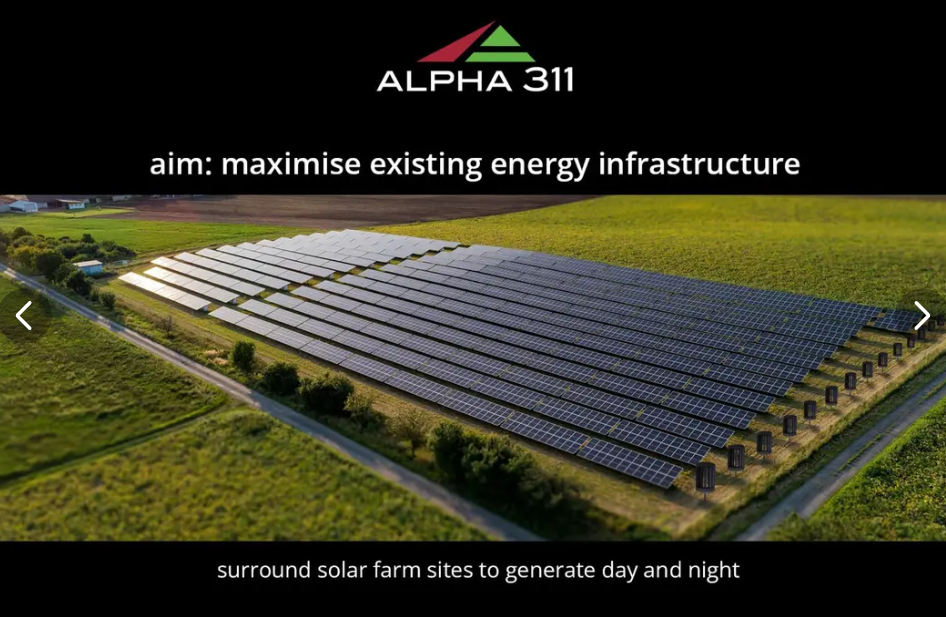
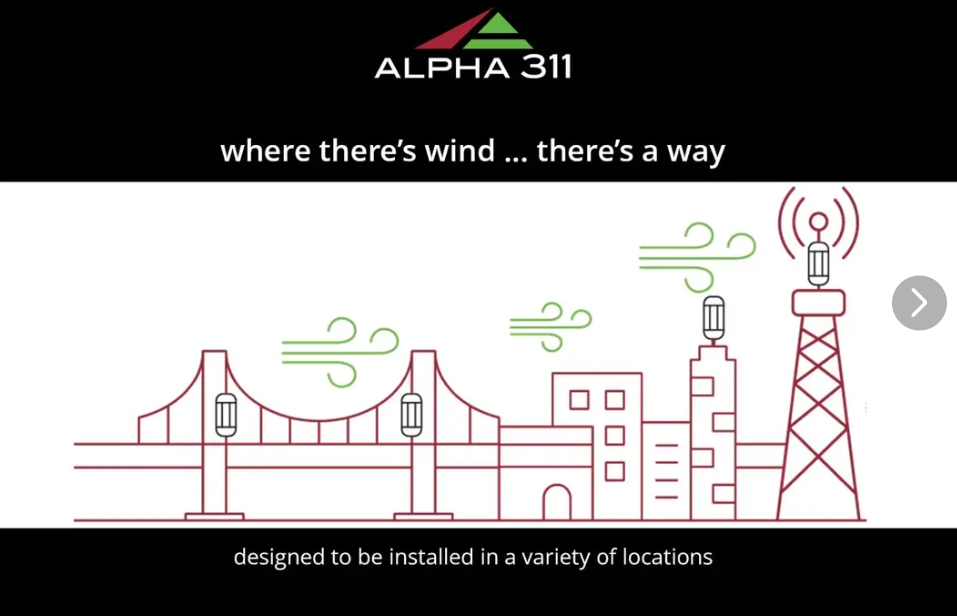
Alpha 311 Ltd is a UK renewable energy hardware company developing a compact vertical-axis wind turbine designed to retrofit onto existing infrastructure such as street-lighting columns, buildings, bridges and telecom masts. The company’s proposition is decentralised energy generation close to the point of use, including from natural wind and airflow created by passing road or rail traffic. The crowdfunding round is being conducted on Crowdcube via ordinary shares at a pre-money valuation of £21,286,620, with EIS status listed as pending.

### What the company does
Alpha 311 has built a shaftless vertical-axis wind turbine using carbon fibre and recycled PET. The product is intended to be installed on existing infrastructure rather than requiring large standalone wind sites. The company also describes modular sensor packs that could provide ancillary data and analytics alongside energy generation. Its stated aim is to help businesses, municipalities and communities reduce carbon emissions, improve local energy resilience and support net-zero goals.

### Product and technology
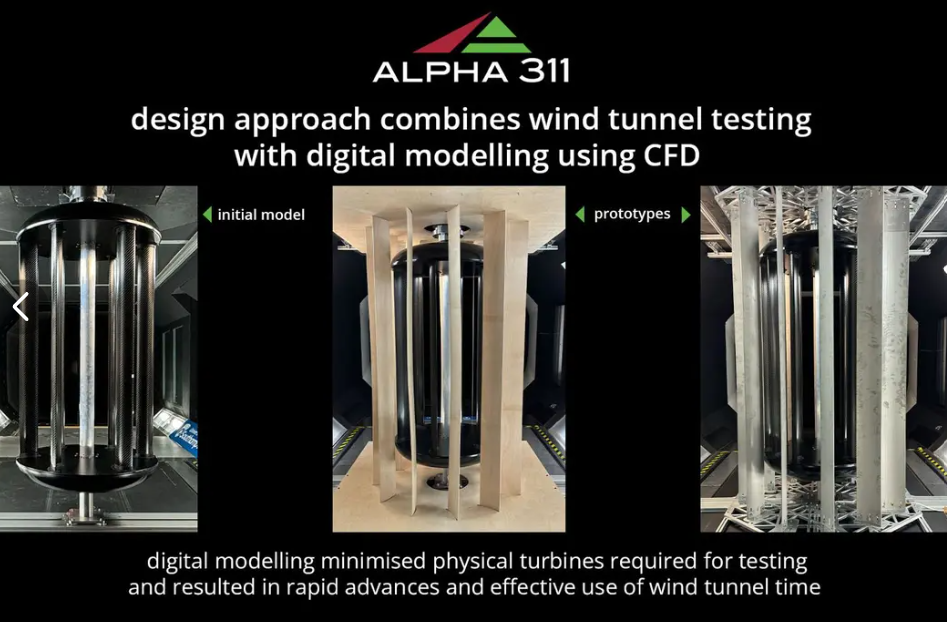
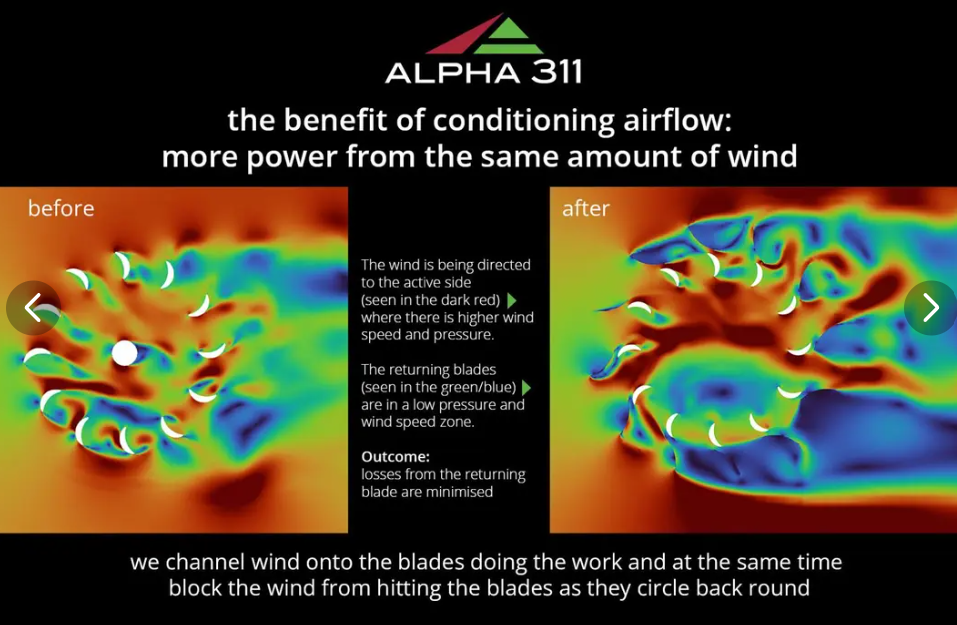
The core technology is a compact retrofit turbine designed for “real-world” wind conditions and roadside or urban deployment. According to the company materials, the turbine has been tested in the University of Southampton wind tunnel, developed using CFD-led design work, and demonstrated through a live installation at London’s O2 Arena. The company also states that one turbine design has been granted by the European Patent Office, with additional patent applications pending in other territories.

### Problem and solution
The company positions its product as a solution for customers that want local renewable generation but face practical constraints with conventional technologies such as lack of space, planning hurdles, long lead times or high capex. Alpha 311’s proposed solution is to turn already-existing infrastructure into energy-generating assets, potentially complementing solar and other green technologies rather than replacing them.

### Target market
Alpha 311 is targeting multiple end-markets including:
- government and municipal infrastructure
- industrial sites
- commercial and residential property developers
- community energy projects
- transport and roadside infrastructure

Its investor deck frames a large highway opportunity across Great Britain, Belgium, the Netherlands and Italy, citing more than 3 million lighting columns across those markets. The company states that fitting turbines to 10% of these could generate 3 GWh per day or 1.1 TWh per year, though this is based on company modelling assumptions.

### Business model
The stated business model is primarily turbine sales to commercial customers, supported by distributed manufacturing. Alpha 311 also indicates that sensor data and analytics could become a secondary revenue stream. Based on the documents provided, the business is still pre-revenue.

### Traction and commercial progress
The company reports:
- 778 enquiries across 83 countries
- 5,000 turbines in two signed MOUs
- a further 1,913 turbines in UK proposals
- 10,228 turbines across global proposals
- a test deployment at The O2 in London

That said, the Fact Dossier makes clear that these figures represent enquiries, MOUs and proposals rather than demonstrated paid contracts. Public triangulation cited in the dossier did not evidence binding revenue-generating contracts, and reported turnover was nil for FY2022, FY2023 and FY2024. The SKI also flags MOU conversion risk.

### Financial profile
Financial information in the Fact Dossier shows:
- FY2022: nil turnover, loss of £760,546
- FY2023: nil turnover, loss of £628,105
- FY2024: nil turnover, loss of £669,662

This implies cumulative disclosed losses of about £2.06m over the last three reported years. The company is described as pre-revenue and loss-making, and states that while it expects runway at the close of this raise, it will need to raise further capital in future. The available accounts are abbreviated and unaudited under the small-company exemption.

### Team and governance
The current team presented in the materials includes:
- John Sanderson — Co-Founder and Board Member
- Barry Thompson — Co-Founder and Board Member
- Zoe Cloke — Head of Technology
- Sir Martyn Lewis CBE — Board Member / ESG-related role

The Fact Dossier notes that the founders’ backgrounds are mainly in engineering, IT and project management. It also notes that no clearly disclosed senior commercial-scale manufacturing or utility-energy operator appears on the executive team, and that reported headcount is very small relative to the scale of the company’s ambitions. A governance discrepancy is also flagged: Sir Julian Horn-Smith was named chairman in 2021 press coverage but is absent from current materials.

### Funding round terms
The round is structured as an equity offering of ordinary shares through the Crowdcube Nominee. Key disclosed terms include:
- share price: £17.928791
- pre-money valuation: £21,286,620
- fully diluted pre-raise shares: 1,187,287
- instrument: ordinary shares
- one vote per share
- pre-emption rights on issue or transfer
- equal economic rights with other ordinary shares
- EIS: pending

The founders together hold about 78.34% pre-raise, giving them substantial control. The provided materials do not disclose the raise amount or the percentage of equity being offered, so post-money valuation cannot be calculated from the available information.

### IP and moat
The company presents intellectual property as a key part of its moat. The dossier records:
- one European Patent Office granted turbine design
- additional applications in the US, Australia and Canada
- further patent filings including later sleeve and stator/rotor designs

However, the SKI-related analysis also notes that pending patents may not be granted and competitors may be able to design around existing IP.

### Key risks
The main risks highlighted across the documents are:

- **Technical validation risk:** headline generation claims are company-modelled and no independent third-party metered roadside field data was identified.
- **Commercial conversion risk:** large pipeline figures have not translated into recognised revenue so far.
- **Financial risk:** the company is pre-revenue, loss-making and will need further capital.
- **Valuation risk:** the £21.3m pre-money valuation is not supported by revenue and no methodology is disclosed.
- **Execution risk:** small reported team relative to manufacturing and deployment ambitions.
- **Deal-term visibility risk:** important items such as liquidation preference, anti-dilution, founder vesting, ESOP size, full cap table and information rights are not disclosed in the provided materials.
- **EIS uncertainty:** tax relief is pending, not confirmed.

### Overall assessment
Alpha 311 presents a differentiated distributed-energy concept aimed at converting underused infrastructure into renewable generation assets. The company has some credible early indicators, including a visible O2 installation, wind-tunnel testing, and at least one granted patent. However, based on the provided documents, it remains pre-revenue, has not yet evidenced conversion of pipeline into binding paid contracts, and its headline performance claims appear not to be independently validated in real-world field conditions. Overall, this is an early-stage, high-risk climate-tech hardware opportunity with potentially large market ambition, but with meaningful technical, commercial, execution and valuation uncertainties.

I explored the Fact Dossier first as the primary source, then cross-checked it against the Project Description, the SKI/KIID document, the Investor Deck and the Investor Memo. I understood the task as producing a factual, structured overview without filling gaps through assumptions. The Fact Dossier was the strongest source for traction, financials, risks and deal terms, while the Project Description and SKI confirmed company positioning and round mechanics. The Investor Deck was useful for market framing and company claims, but some of those claims are explicitly marked in the dossier as company-stated and not independently verified. Overall, I understood the task well and based the overview on the most reliable information available in the attached materials.