AI project overview
Condensed summary based on project data
# Nanoloom — Project Overview

## Executive Summary
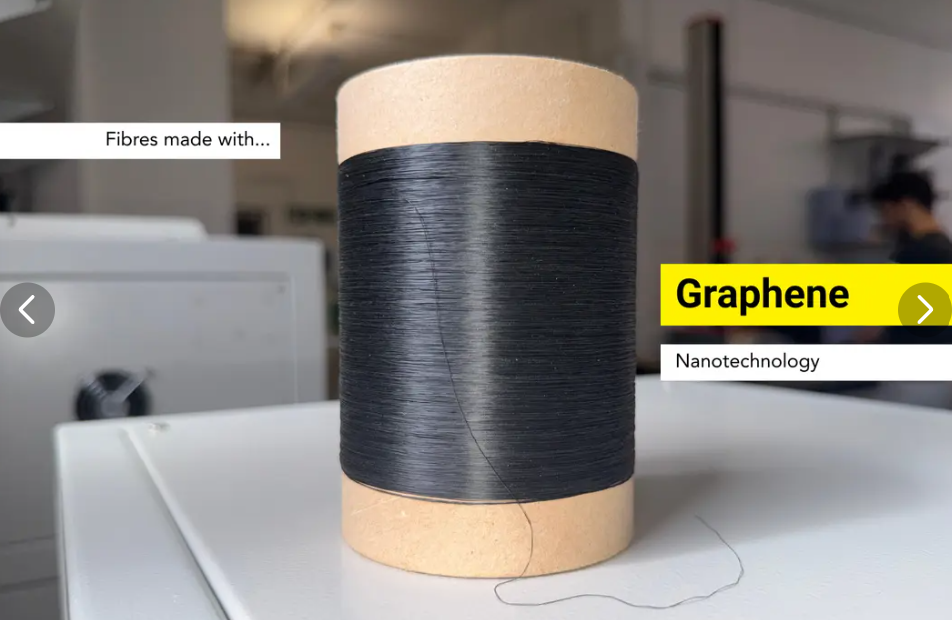
Nanoloom is a UK advanced-materials startup developing graphene-based fibre intended as a high-performance, non-toxic, recyclable alternative to conventional stretch fibres such as spandex/elastane. Its initial commercial focus is the spandex replacement market, which the company sizes at $7.9bn, within a much larger global textiles opportunity. The company is raising £900,000 on Crowdcube at an £8.0m pre-money valuation.

## Company and Product
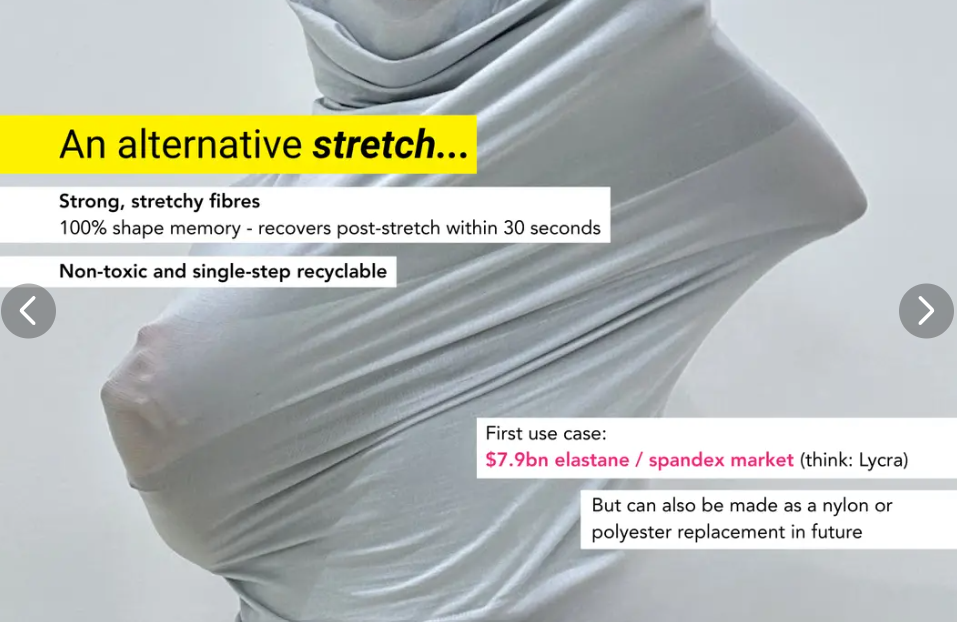
Nanoloom’s core offering is a graphene-based stretch fibre and yarn derived from a patented polymer licensed for non-medical use. The company presents the product as combining elasticity, recovery, tensile strength, breathability, low moisture retention, recyclability, and biodegradability. The deck positions it directly against spandex, claiming superior stretch and recovery performance and circularity advantages.

The Fact Dossier adds important context: the underlying material is based on Hastalex/BioHastalex, a functionalised-graphene-oxide polymer originally developed for medical use by NanoRegMed. Nanoloom does not own the core patent portfolio; it licenses the technology exclusively for non-medical applications. UK and US patents are granted, while European and other regional applications are still pending.

## Problem and Value Proposition
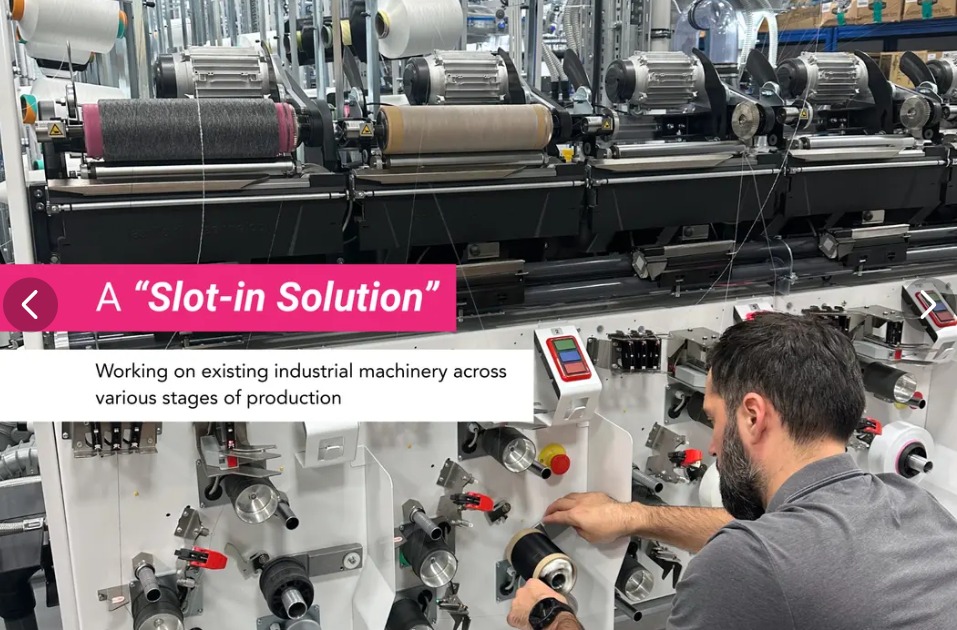
The company’s thesis is that conventional spandex has changed little since the 1970s and suffers from issues such as stretch creep, difficult recyclability, and limited biodegradability. Nanoloom aims to offer a drop-in or near-drop-in alternative that can work within existing textile processes while improving both performance and sustainability characteristics.

## Market Opportunity
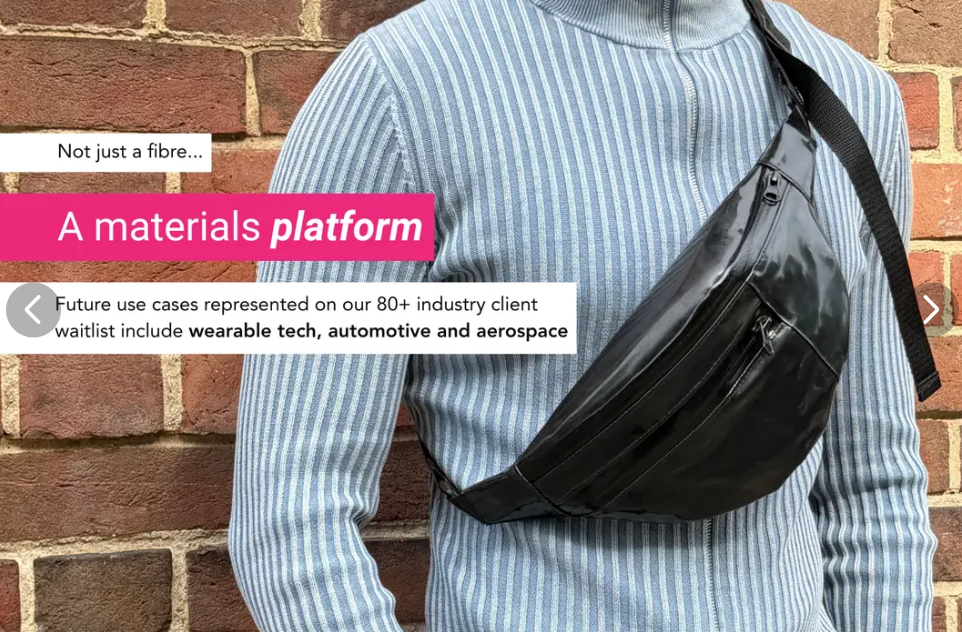
Nanoloom is initially targeting the global spandex/elastane replacement market, cited at about $7.9bn. The broader opportunity is framed across synthetic fibres, apparel textiles, and the wider global textiles market. The deck also points to adjacent applications across sportswear, footwear, luxury fashion, automotive textiles, technical textiles, aerospace, and wearable tech.

The Fact Dossier supports the spandex market figure directionally, while noting that larger TAM numbers are top-down framing rather than proof of near-term addressable demand. It also highlights meaningful competitive risk from entrenched, well-capitalised incumbents and potentially long qualification and adoption cycles.

## Business Model
The company’s stated business model is B2B sales to apparel brands and textile manufacturers, with a proposed future licensing element. Its commercial logic depends on supplying fibre into established textile production ecosystems, while benefiting from compatibility with standard blending and fabric manufacturing equipment.

## Traction and Commercial Progress
The company reports:
- 80+ brands and mills in active conversations or on a waitlist
- signed NDAs
- ongoing pilots and/or pre-orders
- letters of intent
- 100kg of fibre pre-ordered via LOI
- a public relationship with Gymshark

However, the Fact Dossier and Memo qualify this heavily. They state that most of the pipeline appears non-binding, and audited historical revenue remains negligible. The Gymshark relationship is supported as participation in the 2024 Gymshark Innovation Lab, continued to scope a use case, rather than confirmed evidence of a signed supply contract.

## Manufacturing and Scale-Up
Nanoloom currently operates a London pilot line with five extruders and states capacity of up to 500kg per month. It plans to scale manufacturing through a Poland Special Economic Zone operation, expanding to 15 extruders. The stated use of funds is to expand pilot production capacity and support manufacturing scale-up to serve the current pipeline.

The Fact Dossier identifies pilot-to-industrial transition as a major execution risk. It also notes that some capacity claims are company-stated and that supply of the base polymer remains a dependency.

## Intellectual Property
IP is a central part of the story, but also a major risk area. Nanoloom’s technology is protected by licensed patents rather than owned patents. The licence comes from NanoRegMed, a related party. The Fact Dossier states that default on licence-related payments can terminate the arrangement, accelerate obligations, and remove access to core patent rights. It also notes that inventory could have to be destroyed or returned upon licence termination.

The dossier further notes that Nanoloom cannot sub-license the raw base-polymer patents and must retain partial in-house manufacture, which may constrain scalability. It also states that textile-specific performance claims in the deck are not independently verified in the materials provided.

## Team
The company presents a multidisciplinary team across nanotechnology, textiles, manufacturing, and commercialisation. Key people include:
- Victoria Mataczynski, Co-founder
- Alexander Seifalian, Co-founder
- Oliver Willett, Commercial Director
- Jody Dawson, Strategic Expansion Director
- technical and research staff spanning fibre engineering, chemistry, textiles, and production

The Fact Dossier confirms Victoria Mataczynski as co-founder, majority holder, and a recognised Innovate UK Women in Innovation awardee. It also notes that Alexander Seifalian is both a co-founder/director of Nanoloom and linked to NanoRegMed, the IP licensor, creating a related-party conflict that the SKI itself flags.

## Backing and Validation
External validation appears stronger than commercial validation. The materials and dossier support:
- multiple Innovate UK grants
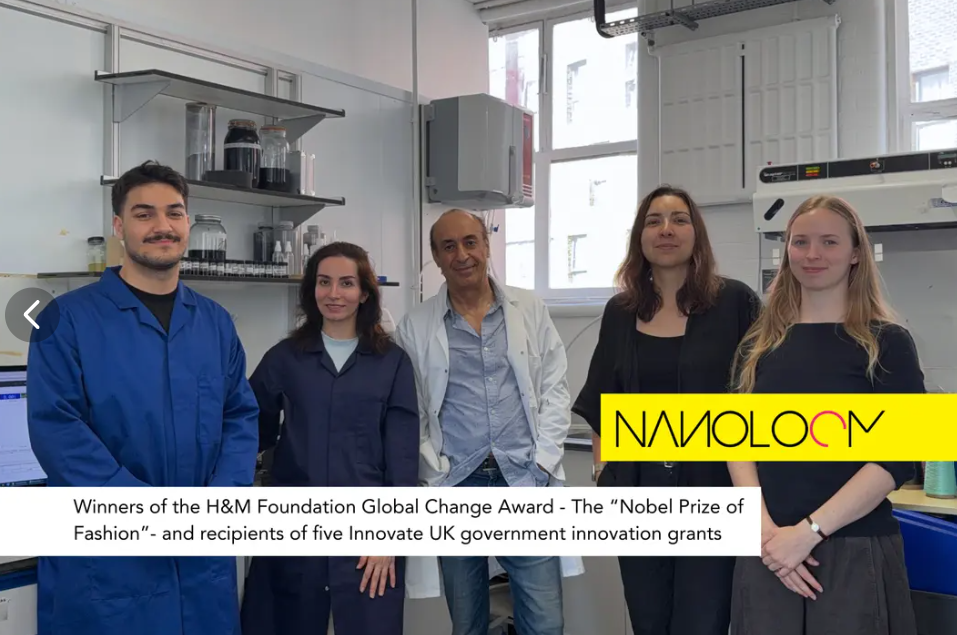
- H&M Foundation Global Change Award cohort participation
- Creative Destruction Lab participation
- backing associated with investors such as Spin Ventures and named angels/advisers

The Memo notes that some award and profile claims remain only partially verified, but overall third-party recognition does provide some credibility around the company’s technology and visibility.

## Financial Snapshot and Funding Round
Based on the provided materials:
- Raise target: £900,000
- Pre-money valuation: £8,000,000
- Share price: £6.82
- Instrument: ordinary equity shares
- Tax relief: EIS indicated

The Memo states post-money valuation would be about £8.9m if the full raise completes. It also highlights that valuation methodology for the £6.82 share price was not disclosed. Audited revenue remains very low, with FY2025 turnover cited at £3,967 and losses widening to £216k. The company also states it will need to raise further capital after this round.

## Key Risks
Main risks identified in the Fact Dossier and Memo include:
- core IP is licensed, not owned
- dependence on NanoRegMed as both licensor and shareholder
- licence-payment default could threaten access to the technology
- traction is largely non-binding and not yet reflected in meaningful revenue
- industrial scale-up remains unproven
- further capital will be required after this round
- governance and related-party conflict issues are explicitly flagged in the documents

## Overall View
Nanoloom presents an ambitious deep-tech materials proposition aimed at replacing spandex with a more sustainable, higher-performance fibre. The company appears strongest in innovation narrative, third-party programme validation, and early commercial interest. It appears weakest in current financial performance, proof of binding commercial conversion, and control of core IP. On the provided evidence, this is an early-stage, high-risk manufacturing and materials opportunity where success depends on technical validation, reliable scale-up, and conversion of stated pipeline into contracted revenue.

I reviewed the Fact Dossier first as the main source, then cross-checked the Project Description, Investor Deck, and Investor Memo. I also used KIID/SKI-derived information as reflected in the dossier and memo excerpts, especially for valuation, investor terms, IP structure, and risks. I understood the task as producing a factual, non-speculative project overview grounded in the supplied documents. Where the materials were unclear or non-disclosed, I have stated that directly rather than inferring missing information.