
Why invest in startups: boost your portfolio via crowdfunding
Discover why invest in startups is crucial for diversifying your portfolio. Learn smart strategies and navigate the risks of crowdfunding today!
- Investing in Startups
Questions about investing? Ask the AI guide.
Hi! I'm the Crowdinform AI guide.
Sign in free to ask the AI guide about platforms, projects and your plans.
AI answers from Crowdinform's checked data. It can make mistakes. Information, not personal investment advice.
Looking it up… Something went wrong. Please try again. {n} questions left today
Spanish startup equity platform authorised by the CNMV: shares in young companies from €1,000; over €40 million in 216 rounds and a Glovo exit, no failure figures.
Capital at risk. Past returns do not predict future returns; a borrower can pay late or not at all.
Higher means more risk. Dozen Investments publishes no figure for failed companies, so investors cannot see how often money is lost. Startup shares are unsecured, there is no secondary market, and its published accounts stop at 2021.
The platform's best exit, Glovo, let investors sell at 3 times their money in 2017, 7 and 14 times in 2018-2019 and more than 20 times in 2020. No return is published for the whole portfolio, so this is a headline, not a typical result.
Medium. In startup investing the winners matter more than the failures, and Dozen has real exits and listings; but high fees on entry and gains, no figures on failures and long holding periods keep the balance in the middle.
Capital at risk. Past returns do not predict future returns; a borrower can pay late or not at all.
Dozen Investments is a Spanish equity crowdfunding platform, run by Dozen Investments PSFP, S.L. from Madrid, where you buy small stakes in young, fast-growing companies. It started as The Crowd Angel and funded the delivery company Glovo in 2015. It says more than 20,000 investors have put more than €40 million into startups through 216 investment rounds (November 2026). Its portfolio page highlights exits and listings, including Glovo, the fraud-prevention firm Revelock (sold to Feedzai in 2021), the ski app Skitude (listed in Oslo in 2020) and the telecoms operator Parlem.
Rounds are usually split into €1,000 tickets so you can spread money across several companies; some rounds ask more, such as €5,000 for the convertible loan in Mygocu open in November 2026. The platform says it publishes only about 2% of the companies it analyses, has a third party check each one's finances, legal and tax position, often invests alongside venture-capital funds on the same terms, and after the round handles reporting and investors' part in later rounds. Some offers qualify for a Spanish income-tax deduction for investing in new companies. Commitments are binding: after the four-day reflection period for non-experienced investors, cancelling costs 10% of the amount, up to €1,000.
Dozen Investments publishes no return for its whole portfolio: no average return, internal rate of return or multiple. What it shows are success stories. Its best is Glovo: investors who sold in 2017 made 3 times their money (a yearly return of about 70%, the platform says), those who sold in 2018 and 2019 made 7 and 14 times (more than 90% a year), and a sale in 2020 paid more than 20 times. Revelock and Skitude are shown as an exit and a listing without saying what investors received. These are the platform's best cases, not what a typical investor earned.
No figures on failed companies are published. The portfolio page has a filter for failed companies but gives no count or share, and shows only a selection of 12 companies out of more than 54 funded. In startup investing many companies fail, and a few successes have to make up for them, so you cannot see from the platform's figures how often its investors lost money.
Nothing secures your money: you own shares, or sometimes a convertible loan, in unlisted startups, and if a company fails you can lose all you invested. Your stake can be diluted when the company raises more money; the platform says it tries to give investors a right to take part in new share issues. There is no guarantee, buyback or reserve fund, and the investments are not covered by deposit guarantee or investor compensation schemes.
Dozen Investments PSFP, S.L. is authorised by the Spanish market regulator (CNMV) as a European crowdfunding service provider and appears in the CNMV register as number 20, entered on 15 December 2023. The projects themselves are not authorised or supervised by the CNMV. Its chief executive is Jaime Gil-Delgado, and founders of the Spanish investment group Inveready are among its strategic partners. It publishes annual accounts and audit reports, but only for 2017 to 2021.
Opening an account is free. Investors pay 6% plus VAT on every amount invested, charged when they invest, and 15% plus VAT of any gain when they sell, charged only if there is a gain. Cancelling a commitment after the reflection period costs 10% of the amount, up to €1,000. Spain charges VAT at 21%, so the entry fee is about 7.3% in practice.
There is no secondary market. Shares in young companies carry transfer limits, and you usually wait for a sale of the company or a listing, which can take many years. If you need to sell earlier, the team will help offer your shares first to other investors, then to the founders and then to new investors, with no guarantee of a buyer. Glovo and Revelock investors could sell during later funding rounds.
Return: Very High, but only as a headline: the Glovo exit paid 3 to more than 20 times, while nothing is published for the portfolio as a whole. Risk: High (higher means more risk): failed companies are not counted, startup shares are unsecured, the accounts stop at 2021 and there is no secondary market. Risk-return: Medium: as for startup equity in general, a few large winners can carry a portfolio, and Dozen has real exits and listings in its record, but high fees on entry and on gains and long waits weigh on what investors keep.
Discover why invest in startups is crucial for diversifying your portfolio. Learn smart strategies and navigate the risks of crowdfunding today!
In this article, you will discover 20+ European startups and growth companies you can invest in from just a few hundred euros — from rising MedTech innovators and biotech breakthroughs to sustainable startups revolutionizing energy, food, mobility, and the circular economy.
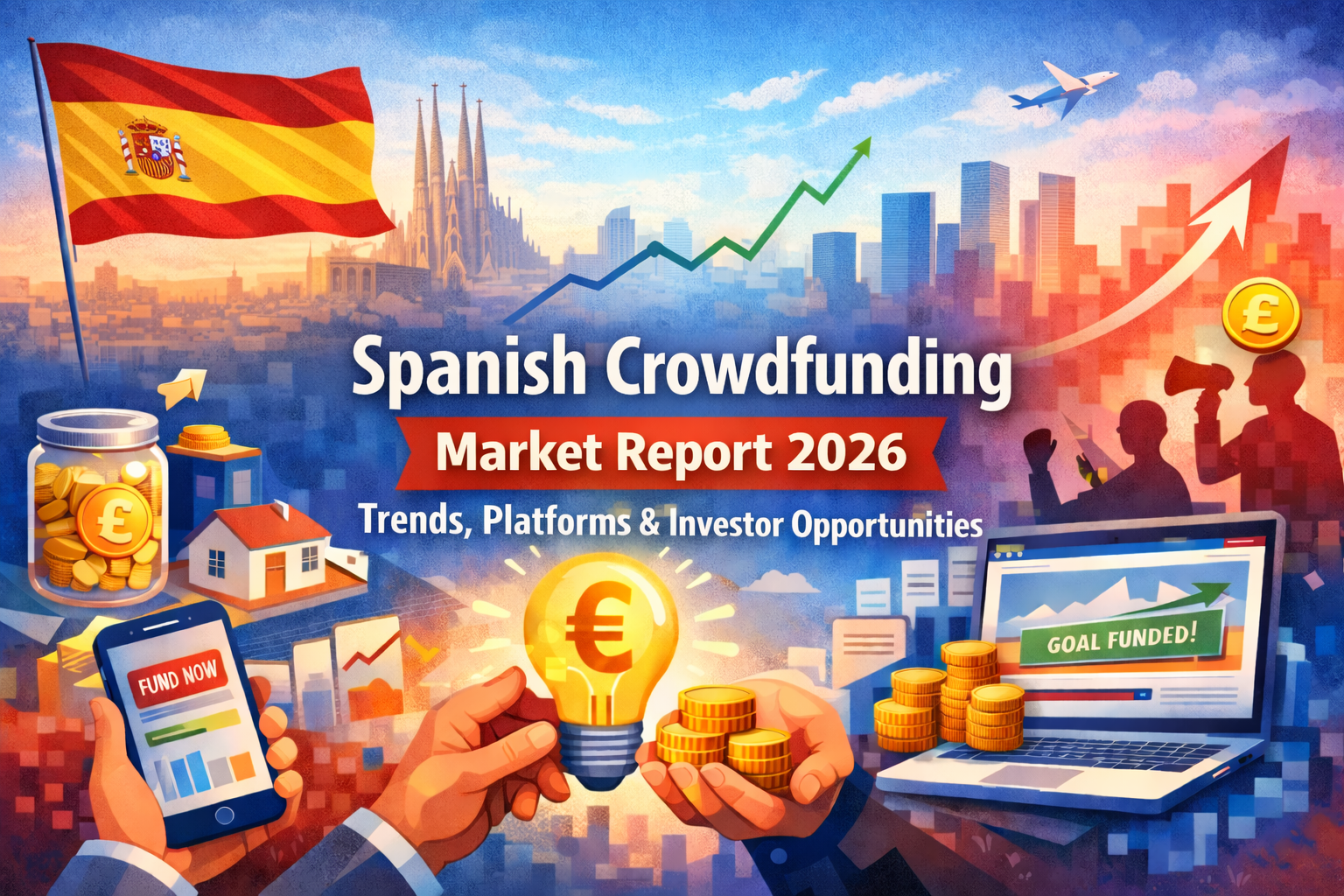
Spain’s crowdfunding sector is a rapidly growing part of the alternative finance landscape, connecting retail investors with startups, SMEs and real estate projects. 🇪🇸💡 In this report, readers will learn about the size and growth of the Spanish crowdfunding market, key trends and sectors, the regulatory framework, and the main crowdfunding platforms and models operating today. We highlight the rising importance of crowdfunding in Spain as banks tighten financing and investors seek higher returns. We also show how Spanish crowdfunding platforms and crowdlending in Spain are evolving under EU and national rules. Keywords like “Spain crowdfunding,” “Spanish crowdfunding platforms,” “crowdlending Spain,” and “Spain equity crowdfunding” are used throughout to guide investors and boost SEO. By the end of this report, beginners will understand the market’s potential, from fast-growing real estate campaigns to equity deals, and how regulation and investor protections shape this landscape.
Yes. Dozen Investments PSFP, S.L. is authorised and supervised by the Spanish market regulator (CNMV) as a European crowdfunding service provider, register number 20 since 15 December 2023. The projects themselves are not authorised by the CNMV, and no deposit guarantee or investor compensation scheme covers your investment.
Payments go through Lemonway, a licensed payment institution, not through Dozen's own accounts. Once a round closes, your money belongs to the company you invested in, and you hold its shares or a convertible loan.
Usually €1,000 per round. Some rounds set a higher minimum, for example €5,000 for Mygocu in November 2026.
No portfolio return or failure figure is published. The best exit, Glovo, let investors sell at 3 times their money in 2017, 7 and 14 times in 2018-2019 and more than 20 times in 2020. How many funded companies failed is not published.
Nothing. Startup shares and convertible loans are unsecured, and you can lose everything if a company fails. There is no buyback or reserve fund.
There is no secondary market. If you need to sell, the team will help offer your shares to other investors, then the founders, then new investors, with no guarantee of a buyer. Otherwise you wait for a sale of the company or a listing.
6% plus VAT on every amount you invest, and 15% plus VAT of any gain when you sell. Cancelling a commitment after the reflection period costs 10% of the amount, up to €1,000. Opening an account is free.
Some offers qualify for the Spanish income-tax deduction for investing in new companies; each offer says whether it applies, and the platform sends the certificates each year. It applies to Spanish taxpayers only.
If a startup fails, your shares are usually worth little or nothing. Your shares are registered in your name in each company, so they do not depend on Dozen staying in business, but reporting and help with selling would stop. No compensation scheme applies.
No reviews with this rating yet.
An investor Sign in to vote on reviews Something went wrong. Please try again. Read more