
Market trends in crowdfunding are the primary force determining which campaigns attract capital and which investors generate returns. In 2026, the crowdfunding market has matured significantly, with data from Regulation Crowdfunding (Reg CF) and Reg A offerings revealing clear patterns that separate successful campaigns from those that stall. For European investors and entrepreneurs, understanding the role of trends in crowdfunding is no longer optional. It is the foundation of any credible investment or fundraising strategy. Platforms like Crowdinform, Crowdfund Insider, and LenderKit now publish granular market intelligence that makes trend analysis genuinely accessible.
How recent crowdfunding market data reveals evolving trends
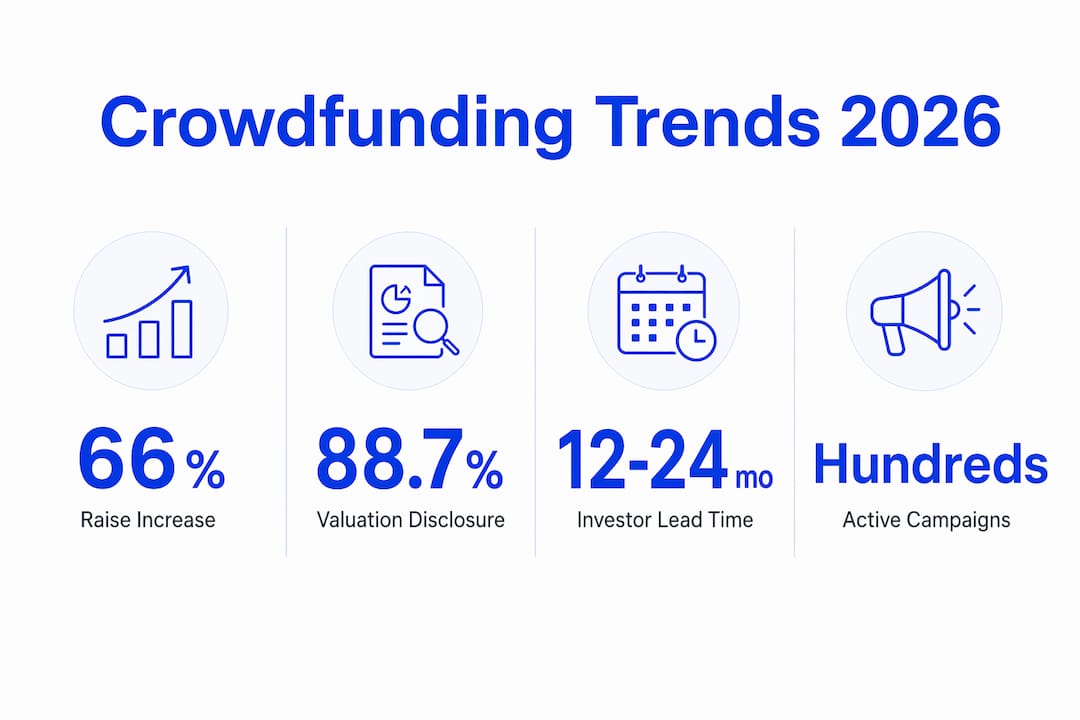
The numbers from Q1 2026 tell a compelling story about where the market is heading. The average Reg CF raise size reached approximately $815,000, up 66% year-over-year. That figure signals a decisive shift: crowdfunding is no longer the domain of early-stage experiments. It is attracting larger, more professionally structured campaigns with institutional-grade preparation.
Longitudinal data reinforces this picture. Issuers on Reg CF show a 27% median annualised revenue growth rate from their first raise, with 70% growing revenue over time. This is not a marginal improvement. It demonstrates that crowdfunding, when executed well, produces companies with genuine commercial momentum.
"Crowdfunding is transitioning to a structured compliance phase with growing investor demand for transparency and accountability, shifting away from experimental models." — LenderKit, 2026
The table below summarises the key data points shaping crowdfunding market trends in 2026:
| Metric | 2026 data point | Implication |
|---|---|---|
| Average Reg CF raise size | ~$815,000 (up 66% YoY) | Campaigns are larger and more professionalised |
| Issuer revenue growth | 70% grow revenue post-raise | Strong commercial outcomes for funded companies |
| Median annual revenue growth | 27% per year | Crowdfunding issuers outpace many traditional SME benchmarks |
| Reg CF valuation disclosure | 88.7% of offerings | High transparency standard for retail investors |
| Reg A valuation disclosure | 21.4% of offerings | Significant transparency gap versus Reg CF |
For European investors using platforms reviewed on Crowdinform, these benchmarks provide a useful reference point when evaluating campaigns on platforms such as Seedrs, Crowdcube, or Republic Europe. The crowdfunding trends impact visible in US data tends to precede similar shifts in European markets by 12 to 18 months, making this intelligence genuinely forward-looking.
What role does platform competition play in crowdfunding success?
Platform competition is one of the most misunderstood forces in crowdfunding. The instinct is to assume that more campaigns competing for the same pool of investors is bad for everyone. The research tells a more nuanced story.
Higher within-platform competition initially reduces individual campaign success rates, but eventually produces a "blockbuster effect" that lifts platform-wide visibility and total funding. As platforms mature, the concentration of high-quality campaigns attracts more investors, which benefits all participants. This non-monotonic relationship means the effects of trends on crowdfunding are time-dependent and context-specific.
The key factors that determine whether competition helps or hurts your campaign include:
- Platform maturity. On established platforms with large investor bases, competition signals credibility and draws attention. On newer platforms, it can dilute funding.
- Crowdfunding awareness. Competition combined with awareness in later platform stages actively enhances campaign success, as informed investors seek out the best opportunities within a competitive field.
- Crisis resilience. Platforms with diverse, competitive campaign portfolios recover faster from exogenous shocks such as economic downturns or regulatory changes.
- Campaign positioning. Campaigns that differentiate clearly within a competitive environment benefit from the increased traffic that competition generates.
Pro Tip: If you are launching on a mature European platform with hundreds of active campaigns, treat the competition as a marketing asset rather than a threat. A busy platform means engaged investors. Your job is to stand out within that crowd, not to avoid it.
Understanding how trends affect crowdfunding at the platform level helps you choose the right venue for your campaign or investment. Crowdinform's database of 500 European platforms includes performance data that lets you assess platform maturity and competitive dynamics before committing capital.

Why specialisation is the defining trend in successful campaigns
The most consistent finding from Q1 2026 crowdfunding market trend analysis is that specificity wins. Campaigns targeting niche audiences with precisely defined products consistently outperform broad-appeal campaigns on conversion rates and total capital raised.
Successful 2026 campaigns use extreme product specificity, targeting motivated niche audiences rather than attempting mass appeal. Specialised creator tools and localised industrial hardware, for example, outperform general consumer items. The reason is straightforward: a niche audience converts at a higher rate because the product solves a specific problem they already recognise.
The sectors generating the strongest results in 2026 follow a clear pattern:
- Climate technology and green energy. Solar capacity projects, battery storage ventures, and carbon-reduction platforms are attracting impact investors who combine financial return expectations with environmental goals. European platforms specialising in this sector, such as those tracked on Crowdinform's sustainable crowdfunding guide, are seeing accelerated fundraising timelines.
- Healthcare technology. Diagnostic tools, remote monitoring devices, and mental health platforms targeting specific patient populations are outperforming general wellness campaigns.
- Community revitalisation and real estate. Localised property and infrastructure projects with clear community benefit narratives are attracting both retail and institutional co-investment.
- Debt instruments offering fixed yield. As interest rate expectations shift, campaigns offering structured debt with defined gross annual yield are drawing investors seeking predictable income over equity upside.
Platform specialisation enables campaigns to target motivated investor segments efficiently, increasing fundraising speed and retention. For entrepreneurs, this means the importance of trends in crowdfunding extends beyond market timing. It shapes how you frame your product, which platform you choose, and which investor community you build before launch.
How regulatory and transparency trends shape investment strategy
Regulatory evolution is one of the most consequential crowdfunding market trends of 2026, and it directly affects how you should assess risk as an investor or structure your offering as an entrepreneur.
The transparency gap between Reg CF and Reg A is striking. Reg CF offerings disclose valuations in 88.7% of cases, compared to just 21.4% for Reg A. This disparity means retail investors in Reg CF campaigns have far more information to work with when assessing fair value. It also means that Reg A campaigns carry a structurally higher information risk that investors must price accordingly.
| Disclosure metric | Reg CF | Reg A |
|---|---|---|
| Valuation disclosure rate | 88.7% | 21.4% |
| Typical investor profile | Retail, community | Accredited, institutional |
| Regulatory oversight | SEC, FINRA | SEC |
| Transparency standard | High | Lower |
For European investors, the analogy is the contrast between platforms operating under the EU Crowdfunding Regulation (ECSPR) and those operating under older national frameworks. ECSPR-compliant platforms are required to publish key investment information sheets (KIIS), which function similarly to Reg CF disclosure requirements. Choosing a regulated crowdfunding platform is therefore not just a compliance consideration. It is a direct input into your risk assessment process.
Ongoing reporting by issuers under Reg CF correlates strongly with higher revenue growth and valuation uplifts, confirming that transparency is not just a regulatory burden. It is a signal of operational health.
Pro Tip: When evaluating any crowdfunding campaign, check whether the issuer has filed ongoing reports voluntarily beyond the minimum required. Issuers who do this consistently tend to be the ones building real businesses, not just raising capital.
The SEC's evolving compliance posture in the US is a leading indicator for European regulators. Investors and entrepreneurs who build transparency into their strategy now will be better positioned as European disclosure standards tighten over the next two to three years.
Key takeaways
Crowdfunding success in 2026 is determined by trend alignment, platform selection, campaign specificity, and regulatory transparency working together as a system.
| Point | Details |
|---|---|
| Market professionalisation | Average raise sizes are up 66% YoY, signalling that campaigns must meet higher standards to compete. |
| Platform competition dynamics | Competition initially reduces individual success but creates a blockbuster effect that lifts all campaigns on mature platforms. |
| Specialisation outperforms | Niche-focused campaigns in climate tech, healthcare, and fixed-yield debt are consistently outperforming broad-appeal offerings. |
| Transparency as risk signal | Reg CF's 88.7% valuation disclosure rate sets the benchmark; choose platforms and campaigns that meet or exceed this standard. |
| Early momentum is decisive | Campaigns that build visibility within the first 48 hours trigger platform algorithms and significantly improve funding outcomes. |
Why I believe trend literacy is the real edge in crowdfunding
By Jevgenijs
Most investors I speak with treat crowdfunding trends as background noise. They focus on the individual campaign, the founder's pitch, the product demo. That instinct is understandable, but it misses the structural advantage that trend-aware investors consistently capture.
Retail investors on crowdfunding platforms back companies 12 to 24 months before institutional capital arrives, often at significantly lower valuations. That timing advantage only materialises if you are already positioned in the right sectors before the institutional money validates them. Climate tech, healthcare diagnostics, and community real estate are not just trending. They are structurally supported by regulatory tailwinds and demographic demand that will persist for years.
What I have found genuinely useful is combining AI-powered due diligence tools with human judgement on founder quality and market timing. AI-powered investment research is transforming how analysts process crowdfunding data, but it cannot replace the contextual reading that comes from tracking a sector over time. The investors who will outperform in European crowdfunding over the next three years are those who use data tools to filter efficiently and then apply genuine sector knowledge to make the final call.
For European entrepreneurs, my strongest recommendation is to study crowdfunding best practices before you launch. The 48-hour momentum window is real. Launch velocity is critical for triggering platform algorithms and securing early social proof. Campaigns that arrive at launch day without a pre-built audience are starting at a structural disadvantage that is very difficult to recover from.
— Jevgenijs
Explore crowdfunding opportunities with Crowdinform

Crowdinform aggregates data from over 500 European crowdfunding platforms, giving you a single place to compare opportunities, read verified platform reviews, and use an AI copilot to analyse individual investment projects. Whether you are looking to invest in loans, real estate, or early-stage startups, Crowdinform's market intelligence helps you apply the trend insights in this article to real decisions. Explore the latest crowdfunding investment opportunities and use the built-in AI tools to assess projects before you commit capital. The market is moving quickly. Having the right data makes the difference between following trends and leading them.
FAQ
What is the role of trends in crowdfunding success?
Trends determine which sectors attract investor capital, which platforms gain momentum, and which campaign formats convert most efficiently. Campaigns aligned with emerging trends in crowdfunding, such as climate tech or fixed-yield debt, consistently raise faster and at better valuations.
How do market trends affect crowdfunding campaign performance?
Trending campaigns in crowdfunding benefit from increased platform visibility, higher investor intent, and stronger social proof. Q1 2026 data shows that campaigns in specialised, high-demand sectors outperform broad-appeal campaigns on both conversion rates and total capital raised.
Why does platform competition improve crowdfunding outcomes over time?
Research shows that higher within-platform competition initially reduces individual success rates but eventually creates a blockbuster effect that increases platform-wide funding. On mature platforms, competition signals quality and attracts more investors to the ecosystem as a whole.
How important is transparency when evaluating crowdfunding investments?
Transparency is a direct proxy for risk. Reg CF campaigns disclose valuations in 88.7% of cases, compared to just 21.4% for Reg A offerings. Investors should prioritise campaigns and platforms that exceed minimum disclosure requirements, as ongoing reporting correlates with stronger revenue growth.
How can European investors use trend analysis for crowdfunding decisions?
European investors can use platforms like Crowdinform to compare performance data across 500 platforms, identify which sectors are attracting capital, and assess regulatory compliance. Reviewing crowdfunding ROI data by sector and platform type is the most direct way to align investment decisions with current market trends.