
Impact investing crowdfunding is defined as deploying capital into projects and startups that generate measurable social and environmental benefits alongside financial returns. This guide to impact investing crowdfunding is written specifically for European retail investors exploring opportunities across social enterprises, renewable energy, real estate, and early-stage startups. The global impact investing market is valued at $1.571 trillion and growing at 10–15% annually. Crowdfunding platforms have lowered the entry point dramatically, with minimum investments ranging from $500 to $50,000. That accessibility is what makes this asset class genuinely exciting for individual investors today.
What is your guide to impact investing crowdfunding?
Impact investing crowdfunding sits at the intersection of two powerful trends: the rise of retail investing platforms and the growing demand for capital with purpose. Unlike traditional impact funds, which require institutional minimums and long lock-up periods, crowdfunding platforms let you invest in individual projects with full visibility of where your money goes.
Contemporary impact frameworks confirm that impact investing no longer requires accepting lower financial returns. Rigorous impact measurement now runs alongside financial tracking in the best-managed portfolios. That shift has made the asset class credible to a much broader audience.
The key distinction from traditional philanthropy is intentionality and measurement. You are not donating. You are investing with the expectation of a financial return, and you are also expecting the project to report on its social or environmental outcomes. Both screens matter equally.
What do you need before investing in impact crowdfunding?
Preparation separates confident investors from those who get burned by excitement alone. Before you commit capital, you need to address four areas: platform selection, regulatory awareness, impact frameworks, and minimum investment terms.
Choosing the right platform
European crowdfunding platforms operate under the EU Crowdfunding Regulation (ECSPR), which came into force in 2023. This regulation standardises investor protections across member states and requires platforms to provide a Key Investment Information Sheet (KIIS) for every offering. Choosing a platform that is ECSPR-compliant is non-negotiable for European investors. You can use Crowdinform's platform comparison guide to screen platforms by regulation, sector focus, and track record.

Key prerequisites at a glance
| Prerequisite | What to Check |
|---|---|
| Platform regulation | ECSPR licence or national equivalent |
| Minimum investment | Typically €100–€5,000 on European platforms |
| Impact framework | Operating Principles for Impact Management (OPIM) alignment |
| Disclosure documents | KIIS, prospectus, or Form C equivalent |
| Liquidity terms | Lock-up period, secondary market availability |
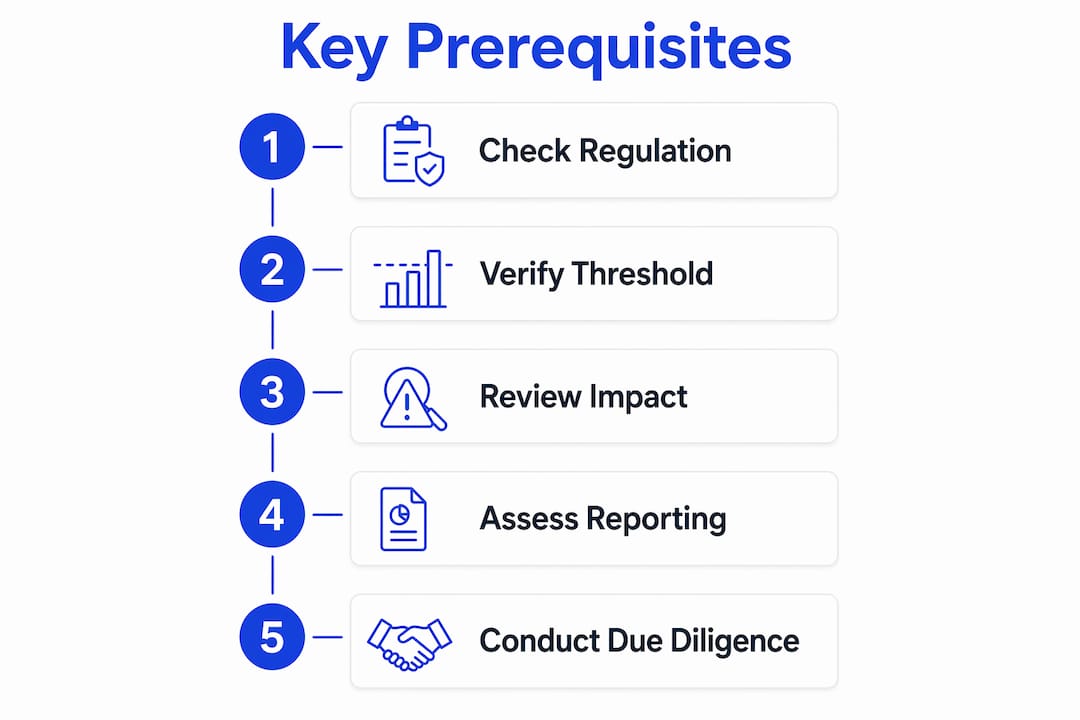
Understanding minimum investment thresholds across European platforms helps you plan your entry strategy before you browse any specific project.
The Operating Principles for Impact Management, developed by the IFC, provide a nine-principle framework that leading platforms use to structure their impact reporting. Platforms that reference OPIM alignment are signalling a higher standard of accountability.
Pro Tip: Before registering on any platform, download its most recent impact report. If the platform cannot produce one, treat that as a red flag and move on.
How do you conduct due diligence on impact crowdfunding projects?
Effective due diligence on impact crowdfunding projects uses a two-screen framework: first, verify that the social or environmental impact is genuine and integrated into the business model; second, assess whether the financial return path is credible. Running both screens in sequence prevents you from falling for compelling storytelling that masks a weak business.
The two-screen process
- Impact screen. Ask whether the social or environmental benefit is the product itself or merely a marketing claim. A solar energy project that sells clean electricity has impact baked into its revenue model. A fast-fashion brand that plants trees as an offset does not pass this screen.
- Financial screen. Review the team's track record, the total addressable market, the competitive position, and the valuation. Check the exit strategy. Early-stage crowdfunding investments are illiquid, so you need a credible path to liquidity.
- Document review. Formal disclosure documents such as European prospectuses and KIIS sheets contain risk disclosures that marketing pages omit entirely. Dilution risk, founder vesting schedules, and prior fundraising history all live in these documents.
- AI-assisted analysis. AI tools now speed up due diligence by summarising lengthy offering documents, flagging inconsistencies, and generating targeted questions to ask founders. Crowdinform's built-in AI copilot does exactly this for projects listed on the platform.
- Community signals. Authenticity and community engagement on crowdfunding platforms are strong indicators of project viability. Check comment sections, founder responsiveness, and backer diversity.
"The marketing page is the pitch. The disclosure document is the truth. Read both, but trust the second one more." — A principle worth keeping on your desk.
Pro Tip: Paste the full text of a project's KIIS into a large-language-model tool such as ChatGPT or Claude and ask it to list the top five risks and three questions you should ask the founder. You will save hours and spot issues you might otherwise miss.
The competitive market context matters here too. Only 17 impact campaigns successfully closed in a typical week across major FINRA-registered portals, raising approximately $6.57 million combined. That selectivity means the projects that do close have already passed a market credibility test, but it also means you are competing with other investors for the best opportunities. Move quickly once your due diligence is complete.
How do you build a diversified impact crowdfunding portfolio?
Portfolio construction for impact crowdfunding borrows directly from venture capital principles. Spreading investments across 10–30 projects is the recommended approach for retail investors, because early-stage failure rates are high and concentration in any single project amplifies that risk. The logic is simple: a few strong performers will more than compensate for the losses, but only if you have enough positions to catch them.
Suggested portfolio allocation by sector
| Sector | Risk Level | Typical Return Horizon | Impact Metric |
|---|---|---|---|
| Renewable energy | Medium | 5–10 years | MWh generated, CO₂ avoided |
| Social real estate | Medium-low | 3–7 years | Affordable units delivered |
| Social enterprises | Medium-high | 3–8 years | Beneficiaries served |
| Early-stage startups | High | 5–10 years | Scalable impact model |
Balancing across these four sectors gives you exposure to different risk profiles, return timelines, and impact themes. Renewable energy projects tend to offer more predictable cash flows because they sell electricity under long-term contracts. Startups carry the highest risk but also the highest potential for scaled impact if the model works.
Key portfolio management principles to follow:
- Set a maximum per-project allocation. Many experienced impact crowdfunders cap individual positions at 5–10% of their total impact portfolio. This prevents any single failure from being catastrophic.
- Review impact reports annually. Platforms that take impact seriously publish annual updates on metrics like carbon absorption, jobs created, or affordable housing units delivered. Track these alongside financial performance.
- Rebalance based on learning. Your first five investments will teach you more than any guide. Adjust sector weightings as you develop conviction in specific themes.
- Avoid over-concentration in favourites. Expert advice warns specifically against doubling down on projects you feel emotionally attached to. Enthusiasm is not due diligence.
For a broader view of what strong performance looks like in practice, Crowdinform's successful crowdfunding projects guide provides real examples with performance data across European platforms.
How do impact crowdfunding sectors differ in risk and return?
Each sector in impact crowdfunding carries distinct characteristics that shape your due diligence process and return expectations. Understanding these differences is what separates a thoughtful portfolio from a random collection of feel-good projects.
Renewable energy
Renewable energy projects, such as solar farms, wind installations, and community energy schemes, are infrastructure investments. They generate revenue by selling electricity, often under government-backed feed-in tariffs or power purchase agreements. The regulatory context in Europe is favourable, with the EU's REPowerEU plan targeting 45% renewable energy by 2030. Technology risk is low for proven assets like solar PV, but planning delays and grid connection timelines can extend your return horizon. For detailed sector-specific analysis, Crowdinform's guide on researching renewable energy projects covers the key metrics to review.
Real estate impact crowdfunding
Real estate impact projects focus on outcomes like affordable housing, social care facilities, or sustainable commercial buildings. Valuation methods here follow standard property appraisal approaches, but you should also scrutinise location, planning permission status, and the developer's track record. Rental income and capital appreciation drive financial returns, while social outcomes are measured in units delivered or residents housed. Crowdinform's guide on analysing real estate crowdfunding walks through the valuation process in detail.
Social enterprises and startups
Social enterprises and startups carry the highest risk and the greatest potential for scaled impact. Short campaigns of 2–6 weeks with clear, authentic storytelling consistently outperform longer campaigns for social impact projects. That tells you something important: if a founder cannot communicate their mission compellingly in a short window, the project may lack the clarity needed to execute at scale.
For startups specifically, assess the team above all else. A strong team with a mediocre idea will pivot. A weak team with a brilliant idea will struggle to execute. Check LinkedIn profiles, prior exits, and domain expertise before you look at the financial projections.
Pro Tip: For social enterprise campaigns, look at the comment section and backer questions. Active, engaged communities signal genuine interest. Silence or generic praise signals a founder who has not built real traction.
What i have learned after years of impact crowdfunding
Why enthusiasm without rigour is the biggest trap in this space
I have watched investors, including myself in the early days, get swept up in a project's mission and skip the financial screen entirely. The result is a portfolio full of projects you believe in but cannot exit, generating impact reports you are proud of and financial returns you cannot discuss.
The honest truth about impact investing crowdfunding is that the impact story is often the strongest part of the pitch. Founders who care deeply about their mission are excellent at communicating it. They are not always as strong at building scalable businesses. Your job as an investor is to hold both standards simultaneously, and that requires discipline.
The rise of AI-assisted analysis has genuinely changed my process. I now spend less time reading and more time thinking. Feeding a 40-page prospectus into an AI tool and getting a structured risk summary in two minutes is not laziness. It is leverage. The questions the AI generates are often sharper than the ones I would have written myself.
The sectors I am most excited about in 2026 are community renewable energy schemes and social real estate across Central and Eastern Europe. Both sectors have strong regulatory tailwinds, underserved markets, and founders who are building for the long term. The safest crowdfunding options for cautious investors tend to sit in these categories too, which makes them a sensible starting point if you are new to the space.
My advice: start small, diversify early, and treat your first ten investments as tuition. The returns will follow if the process is sound.
— Jevgenijs
Explore impact investing opportunities with Crowdinform
Crowdinform aggregates and reviews over 500 European crowdfunding platforms, giving you a single place to compare impact-driven investment opportunities across loans, real estate, and startups.

Whether you are building your first impact portfolio or expanding an existing one, Crowdinform's AI copilot analyses individual projects and generates structured due diligence summaries so you can invest with confidence. The platform covers sectors from renewable energy in Scandinavia to social housing in Poland, with minimum investments accessible to retail investors across Europe. Start exploring impact projects on Crowdinform today and put your capital to work for both returns and real-world change.
Key takeaways
Successful impact investing crowdfunding requires equal rigour on both the impact screen and the financial screen, supported by platform selection, portfolio diversification, and AI-assisted due diligence.
| Point | Details |
|---|---|
| Market access is real | The impact investing market is $1.571 trillion globally, with crowdfunding entry points from $500. |
| Two-screen due diligence | Always verify genuine impact integration and financial viability before committing capital. |
| Diversify across 10–30 projects | Spreading investments across sectors reduces the risk of early-stage failure wiping out returns. |
| Sector knowledge changes your edge | Renewable energy, real estate, social enterprises, and startups each carry distinct risks and metrics. |
| AI tools cut diligence time | Using AI to summarise disclosure documents improves screening quality and saves significant time. |
FAQ
What is impact investing crowdfunding?
Impact investing crowdfunding is the practice of investing capital through online platforms into projects that generate measurable social or environmental outcomes alongside financial returns. Minimum investments typically range from €100 to €5,000 on European platforms.
How does impact investing work differently from traditional investing?
Impact investing applies a dual filter: financial return potential and measurable social or environmental impact. Contemporary frameworks confirm that financial trade-offs are no longer a requirement, with rigorous impact measurement running alongside standard financial tracking.
Which sectors are best for impact crowdfunding in europe?
Renewable energy, social real estate, social enterprises, and early-stage startups are the four main sectors. Renewable energy and social real estate carry lower risk profiles, while startups offer higher potential returns and scaled impact if the business model succeeds.
How many projects should i invest in to manage risk?
Diversifying across 10–30 projects is the recommended approach, applying venture capital principles to mitigate the high failure rate of early-stage impact ventures.
What documents should i review before investing?
Always read the Key Investment Information Sheet (KIIS) or equivalent prospectus for every project. These formal disclosure documents contain risk disclosures on dilution, founder track records, and financial projections that marketing pages routinely omit.