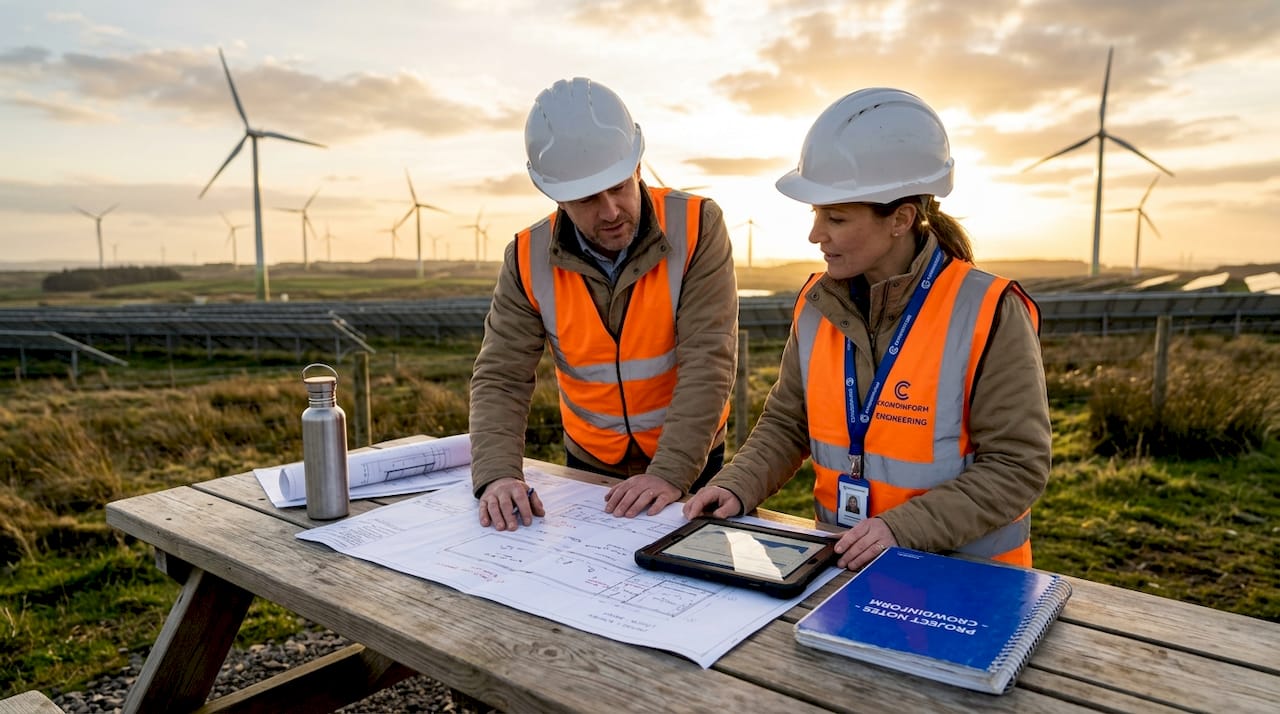
From wind farms repowered with next-generation turbines to solar panels doubled up with sheep grazing underneath, the best examples of renewable energy projects today are proving that clean energy is no longer just good ethics. It is sound economics. Over 90% of new electricity capacity added globally in 2024 came from renewable sources, marking a definitive shift in where capital flows. For investors and organisations weighing where to commit resources, the challenge is not finding renewable projects. It is identifying the ones genuinely worth backing. This article covers seven standout examples across wind, solar, off-grid, and agrivoltaic technologies to give you a practical map. 🌱
Key takeaways
| Point | Details |
|---|---|
| Repowering cuts costs sharply | Upgrading existing wind sites is 40–60% cheaper than building new ones and unlocks fresh tax credits. |
| Agrivoltaics boosts land value | Co-locating solar panels with grazing animals raises land-use efficiency and energy output by 5–10%. |
| Battery co-location lifts returns | Pairing storage with solar can reduce project costs by 15–25% and add significant yield to investor returns. |
| Off-grid projects deliver social impact | Remote solar parks create jobs, cut CO₂ emissions, and deliver energy independence to underserved communities. |
| Community engagement prevents costly delays | Early local involvement protects land rights, reduces regulatory friction, and improves long-term project performance. |
1. Wind farm repowering: NextEra Energy’s transformative upgrade
Repowering is one of the most underrated strategies in wind energy, yet it consistently delivers compelling results. Rather than building from scratch, repowering replaces ageing turbines on proven, permitted sites with higher-capacity modern equipment.
NextEra Energy repowered 5,400 MW across 22 sites, pushing capacity factors from 32% to 42% whilst generating $1.2 billion in tax credit value. The economics are hard to argue with. Repowering can be 40–60% cheaper than greenfield development, and sites automatically requalify for new production tax credits under US and comparable European frameworks.
Key advantages of repowering as a renewable energy strategy:
-
Established grid connections already in place, saving years of permitting
-
Proven wind resource data from years of operational history
-
Lower community opposition compared with virgin greenfield proposals
-
Immediate capacity gains without land acquisition complexity
Pro Tip: When evaluating wind repowering opportunities on crowdfunding platforms, look for developers with multi-site portfolios. Volume procurement of turbines drives down per-unit equipment costs substantially, which flows directly into your projected gross annual yield.
Dogger Bank Wind Farm off the UK coast represents the offshore counterpart: the world’s largest offshore wind project at 3.6 GW capacity. Its scale alone makes it a landmark, though large offshore projects carry execution complexity that repowering does not. For most investors entering through crowdfunding routes, repowering remains the lower-risk, faster-return model. 🚀
2. Solar and agrivoltaics: Rangitaiki Solar Farm, New Zealand
Agrivoltaics increasingly delivers dual-use benefits for landowners and energy investors alike, and the Rangitaiki Solar Farm in New Zealand’s Bay of Plenty is one of the clearest illustrations. Here, bifacial solar panels are elevated on frames high enough for sheep to graze beneath them freely. Rotational grazing keeps the ground cover managed, eliminating mowing costs and generating income for the landowner simultaneously.
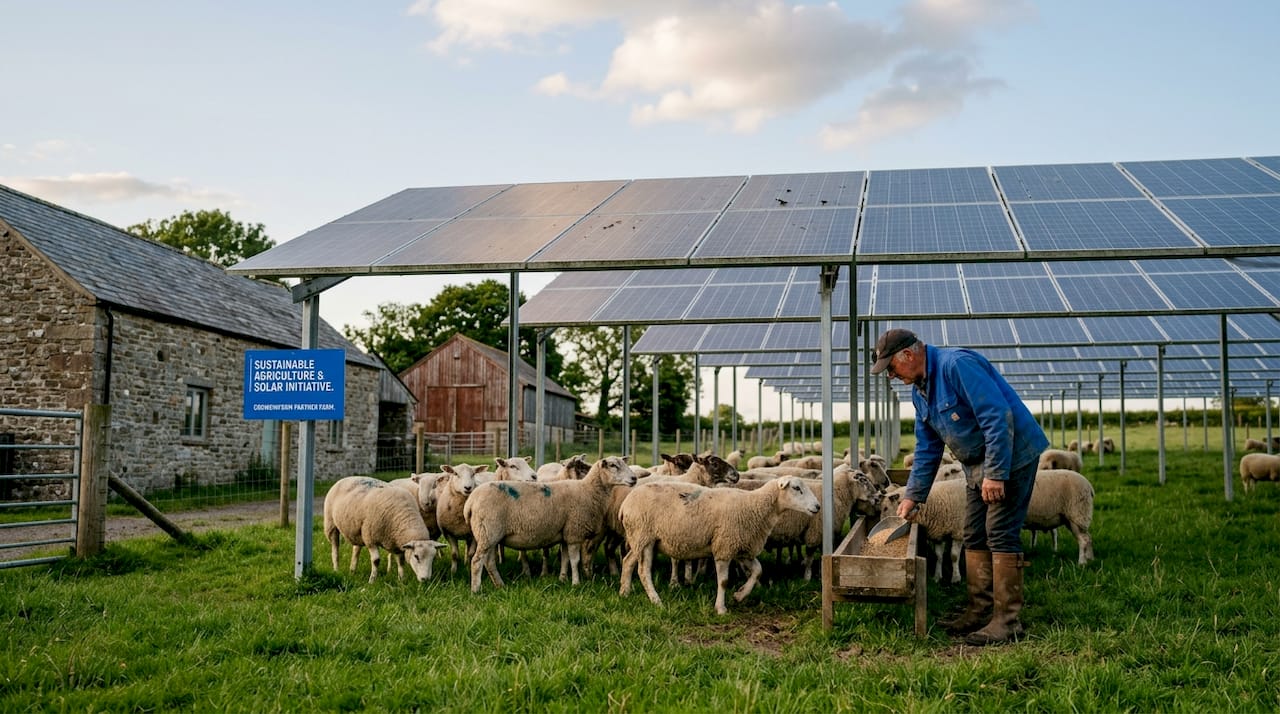
Agrivoltaic co-location boosts energy output by 5–10% compared with standard ground-mount configurations, partly because the vegetation beneath keeps surface temperatures lower. Bifacial panels themselves contribute an additional gain: bifacial modules increase energy yield by 5–15% depending on ground reflectivity, and NextEra’s comparable solar projects recorded an average 8.7% yield improvement at only a modest cost premium.
What makes this model so attractive for European investors:
-
Land-use conflicts between farmers and developers are significantly reduced
-
Landowners receive dual income streams (grazing rights plus land lease)
-
Solar yields improve due to lower panel temperatures and bifacial capture
-
The model scales across sheep, cattle, and arable rotation systems
Pro Tip: When reviewing agrivoltaic projects on investment platforms, check whether the operator has a formal grazing management agreement in place. Poorly managed vegetation leads to shading losses that erode the yield gains the technology promises.
3. Battery co-location: solar storage projects raising investor returns
Co-locating battery storage with solar generation is arguably the most significant financial upgrade available to solar projects right now. The logic is straightforward. A solar farm generates its peak output at midday, when wholesale electricity prices are often at their lowest. A battery stores that energy and releases it during evening peak-demand periods, when prices can be 2.5 to 4 times higher.
Battery co-location reduces project costs by 15–25% through shared grid connections, civil works, and monitoring infrastructure. Beyond cost savings, the time-shifting capability adds 150–250 basis points to the internal rate of return (IRR), according to comparable project case studies. For impact investors comparing two otherwise similar solar opportunities, battery co-location is the detail that separates a good project from an excellent one.
The technology maturity has also improved sharply. Lithium iron phosphate (LFP) batteries now dominate co-located storage for their safety profile and cycle longevity, and procurement costs continue to fall. Projects in Germany, Spain, and the UK are routinely pairing solar capacity with 2 to 4-hour storage systems to capture ancillary services revenue alongside energy arbitrage.
4. Off-grid solar: Luau Photovoltaic Park, Angola 🌍
Off-grid renewable energy projects serve a different mission from their grid-connected counterparts. They are not competing with fossil fuel plants on a wholesale market. They are replacing diesel generators and providing electricity access to communities that have never had it reliably.
The Luau Photovoltaic Park in Angola is Africa’s largest off-grid solar installation. It delivers 31.85 MWp solar capacity with 75.26 MWh battery storage to communities in the Moxico Province. Total investment exceeded €87 million. The project created over 200 jobs during construction and operation, and avoids approximately 47 tonnes of CO₂ emissions annually. The battery storage component handles the intermittency challenge that traditionally limits off-grid solar viability.
| Project | Location | Capacity | Storage | Key impact |
|---|---|---|---|---|
| Luau PV Park | Angola | 31.85 MWp | 75.26 MWh | 200+ jobs, €87m investment |
| Pine Point School Microgrid | USA | 500 kW solar | 2.475 MWh | Saves $1.15m over 25 years |
| Kenya Geothermal/Wind/Solar | Kenya | Multi-tech | Grid-scale | Baseload + variable integration |
The Pine Point School microgrid offers a smaller-scale but equally instructive example. A 500 kW solar array paired with 2.475 MWh battery storage powers the entire school during grid outages and generates $1.15 million in savings over 25 years. These community resilience hubs are growing rapidly across North America and Europe, often funded through a combination of public grants and private crowdinvestment.
Risk mitigation strategies such as finance guarantees and institutional insurance are especially critical in developing-region projects, where political and currency risk can threaten otherwise sound investments.
5. Agricultural renewable energy: Australian almond farm solar system
One of the most practical examples of solar energy projects operating at farm scale comes from Australia. An almond farm in South Australia installed a 5.99 MW solar and battery system including over 10,000 solar panels, generating 14,000 MWh per year. The result: 83% renewable energy use across the entire farming operation and a reduction of 7,500 metric tonnes of CO₂ emissions annually.
The financial logic is compelling for agricultural businesses. Farms carry significant daytime electricity loads for irrigation, refrigeration, processing, and machinery. Solar generation profiles match those loads almost perfectly. Battery storage covers the morning start-up loads and evening processing runs that fall outside peak solar hours. The farm effectively insulates itself from volatile grid energy prices whilst dramatically cutting its carbon footprint.
Pro Tip: Agricultural solar projects often qualify for both agricultural grants and renewable energy incentives simultaneously. When evaluating farm-scale projects through renewable energy crowdfunding platforms, look for operators who have confirmed their dual-incentive eligibility. It materially improves project economics.
This model also addresses one of the persistent criticisms of large solar farms. By placing generation on working agricultural land rather than converting it, the land-use conflict dissolves entirely.
6. Comparing successful renewable energy initiatives: what drives results
The diversity of examples above underscores that there is no single template for a successful renewable energy project. But there are consistent factors that separate the projects that deliver from those that stall. Here is a practical comparison across the main types:
| Project type | Typical scale | Technology maturity | Community engagement need | Investor return profile |
|---|---|---|---|---|
| Wind repowering | 50–500 MW | High | Moderate | Competitive, faster returns |
| Ground-mount solar + storage | 5–200 MW | High | Low to moderate | Steady, enhanced by storage |
| Agrivoltaics | 1–50 MW | Growing | High (farmer buy-in critical) | Good, with dual income streams |
| Off-grid solar microgrid | 0.5–30 MW | Moderate | Very high | Impact-led, subsidised structures |
| Agricultural farm solar | 1–10 MW | High | Low | Strong via dual incentives |
Strong community engagement is not optional for most project types. Industry data shows it is the single most cited factor in avoiding regulatory delays and securing long-term land rights. Projects that skip this step routinely face objections, planning rejections, or costly renegotiations mid-delivery.
Technology maturity matters too. Chasing novel technologies to capture higher projected yields often introduces procurement delays and warranty risk. The most successful developers, including those leveraging volume procurement strategies like NextEra, consistently outperform by standardising on proven equipment and negotiating volume discounts rather than speculating on unproven platforms.
For European investors exploring renewable energy investment options, Kenya’s multi-technology national energy transition offers an instructive case. Geothermal provides the baseload while variable wind and solar layer on top, demonstrating how blended technology approaches can build resilient national grids and attract diverse funding structures.
My perspective on picking the right renewable energy projects
I’ve spent considerable time reviewing renewable energy projects across European crowdfunding platforms, and the pattern that strikes me most is how often investors chase the headline number. A 12% gross annual yield on an off-grid project in a challenging emerging market looks more exciting than 7% on a wind repowering deal in Germany. But headline yield is not the whole story.
In my experience, technology discipline is the most undervalued quality in a project operator. Teams that stick to proven turbine models, standard battery chemistries, and well-understood grid connection processes routinely outperform teams that reach for cutting-edge equipment to justify higher return projections. The projects I find genuinely worth backing are the ones where the operator is almost boringly consistent in their technology choices.
Community engagement is the second factor I watch closely. I’ve seen more than one agrivoltaic project stall because the developer assumed landowner sign-off meant local community support. It does not. The projects that deliver on time and on budget almost always started their community consultation 12 to 18 months before financial close, not as a box-ticking exercise but as genuine dialogue.
Repowering and battery co-location are the two strategies I return to most often when advising investors on where to find value. Both reduce execution risk by working with existing infrastructure and proven technologies. Both also offer clear, quantifiable improvements over baseline performance. That combination of lower risk and measurable upside is exactly what the best impact investing opportunities look like. 🎂
Balancing ambition with risk means aligning the project to local grid realities, land use norms, and the financial maturity of the market. A brilliantly engineered project in the wrong regulatory context rarely produces the returns it promises on paper.
— Jevgenijs
Invest in green projects with Crowdinform 🚀
The examples above show what is possible when the right technology meets the right operator and the right funding structure. If you are ready to move from reading about renewable energy projects to actually investing in them, Crowdinform gives you the tools to do it with confidence.
Crowdinform aggregates and reviews over 500 crowdfunding platforms across Europe, with AI-powered project analysis that gives you a structured breakdown of any renewable energy opportunity before you commit capital. Whether you are exploring wind repowering deals, agrivoltaic projects, or off-grid solar funds, the platform’s built-in AI copilot helps you compare gross annual yields, assess operator track records, and diversify across green projects to balance risk and return. Start exploring curated renewable energy investment opportunities on Crowdinform today and put your capital to work where it genuinely makes a difference. 🌱
FAQ
What are the most common types of renewable energy projects?
The most common types include onshore and offshore wind farms, ground-mount and rooftop solar, agrivoltaic systems, off-grid microgrids, and battery co-located solar plants. Each suits different scales, geographies, and investor return profiles.
What are the main benefits of renewable energy projects for investors?
Renewable energy projects offer competitive financial returns, often enhanced by government incentives and tax credits, alongside measurable environmental impact such as CO₂ reductions and community energy access.
How does agrivoltaics differ from standard solar farms?
Agrivoltaics co-locates solar panels with agricultural activity, such as sheep grazing or crop growing. This raises land-use efficiency, reduces developer-farmer conflicts, and can increase energy output by 5–10% compared with standard configurations.
What is wind farm repowering and why does it matter?
Wind farm repowering replaces ageing turbines on existing, permitted sites with modern higher-capacity equipment. It costs 40–60% less than greenfield development and typically unlocks new production tax credits, making it one of the strongest risk-adjusted opportunities in renewable energy.
How do I evaluate a renewable energy crowdfunding project?
Check the operator’s technology choices, community engagement history, battery co-location or repowering credentials, and whether dual financial incentives apply. Platforms like Crowdinform provide AI-assisted project reviews to help you compare opportunities systematically.